FREE SHIPPING on orders of 4,000 TL or more



Blog
Shamanism and Healing: The Ancient Covenant of Body, Mind, and Spirit

The day people realized that a human being is not merely a creature of flesh and bone, healing took on an entirely new meaning.
For thousands of years, people did not seek the cause of illness solely within the body. They saw the unspoken words behind a headache, the fears carried within the tightness in the chest, and the lost sense of direction behind insomnia. This is precisely where Shamanism was born: as one of the oldest paths of healing that views the human being as a unity of body, mind, and spirit.
As academic studies also indicate, the shaman is not merely a “person who performs rituals”; they are the community’s first healer and one of the oldest faces of folk medicine. Researchers note that throughout history, shamans have combined ritual and healing practices; their identity as healers has earned them respect.
They have interpreted illness not merely as a physiological disorder but as a disruption of spiritual balance. What the shaman says is simple yet profound: “Illness
is the echo of the spirit’s voice within the body.”
That is why healing is more a process of remembrance than a battle—a remembrance of balance, of roots, of rhythm… of the self.
What is healed in shamanic healing?
In the shamanic understanding, the primary goal is not to silence the pain but to bring the person back to their center.
It touches upon these areas:
- The places where the spirit has grown weary.
- Suppressed emotions.
- Grief that has been put off for a long time.
- The voids where anxiety has taken root in the heart.
- Moments when the connection to life has grown thin.
Instead of calling a person “sick,” the
shaman sees them as “a being whose rhythm
has been disrupted.”
And calls them back to their rhythm.
The three main paths
of shamanic healing Cultures differ, clothing differs, drums differ.
But the core remains the same.
1) Plants
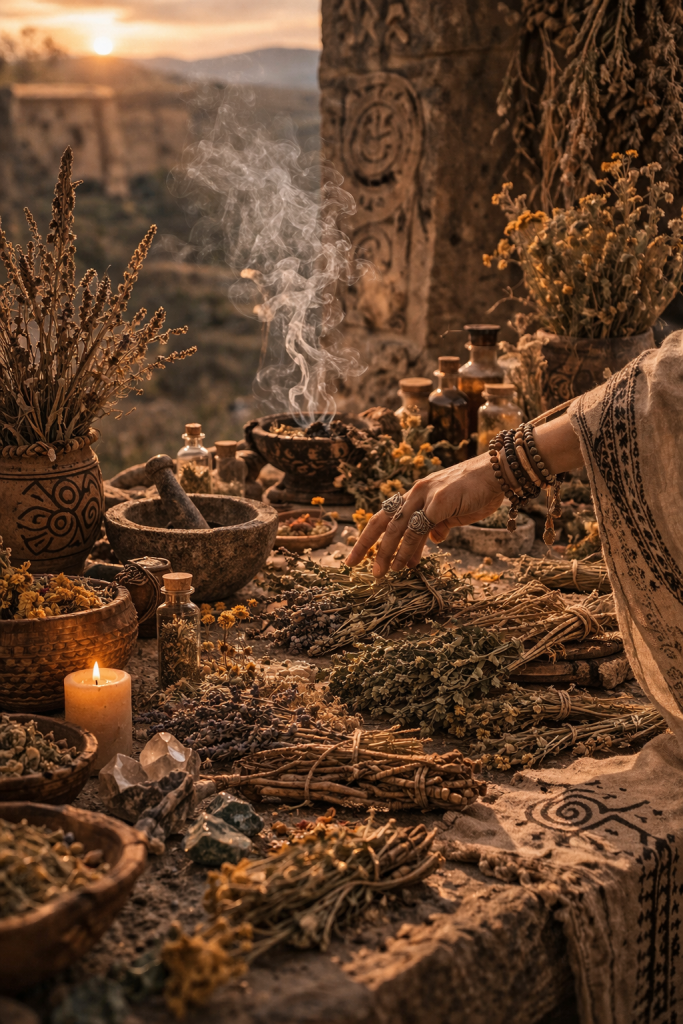
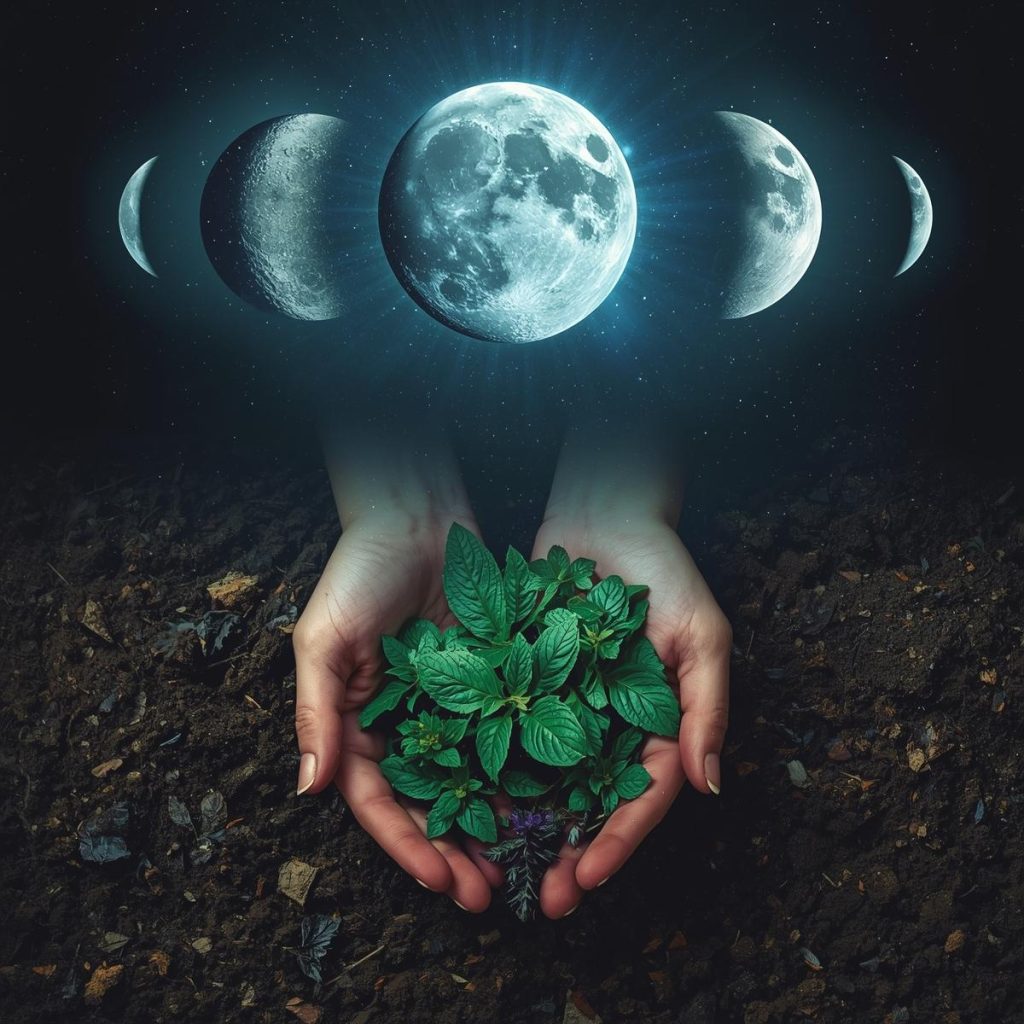
Plants are not merely chemical compounds; they are regarded as companions:
- They offer a gentle touch to the nervous system
- They awaken memory through scent
- They slow the mind
- They call the spirit into the present moment
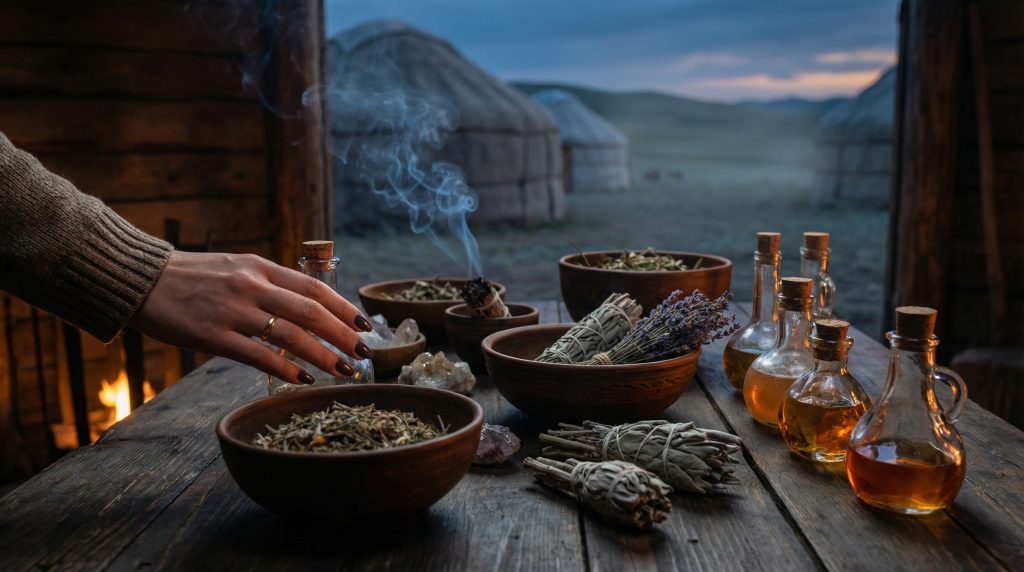
Scent is no coincidence here. Scent directly touches the limbic system. That’s why soul perfumes, hydrosols, and ritual sprays aren’t just “pleasant scents”; they’re a gateway.
Everything that enters changes along with your intention.
2) Sound and rhythm
The steady beat of the drum, the trembling sound of the bell, the rise and fall of the breath…
All of these share the same purpose:
- To slow down the mind
- To approach alpha and theta waves
- To open up inner vision
What we see
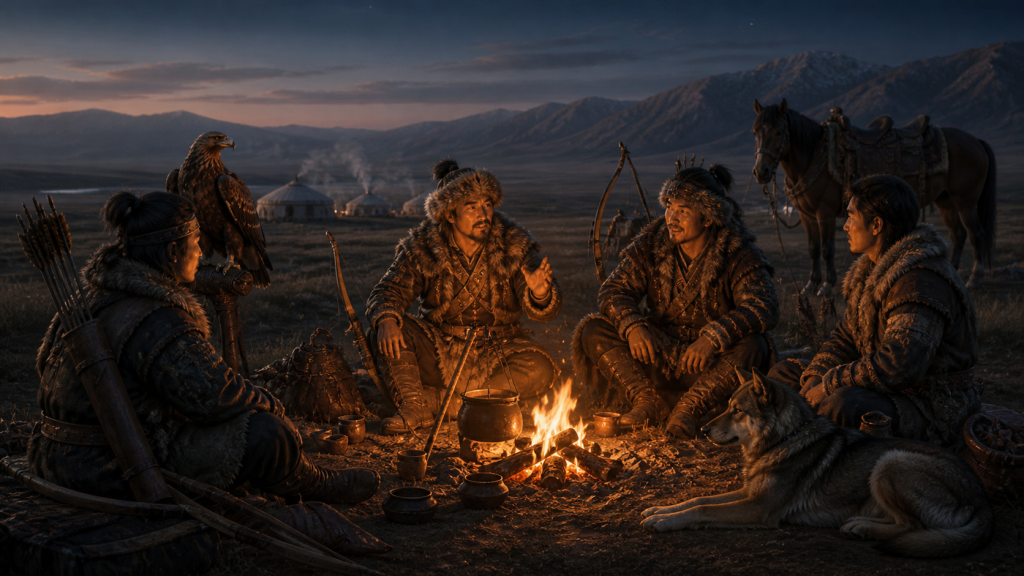
today on EEG machines is strikingly similar to the effect of a drum played on the ancient steppe. Science measures in its own language; the shaman brings it to life in his own. Both point to the deep rhythm of the human being.
3) Intention and Ritual
At the heart of shamanic healing lies a simple yet powerful truth: Intention arises before action. The form of the ritual may vary, but the structure is as follows:
- The space is opened
- Intention is spoken
- Burdens are released
- Renewal is invited
That is why even a small spray, when combined with the right intention, becomes more than just a scent—it transforms into a covenant the person makes with themselves.
Collective consciousness and individual healing
The shamanic tradition does not look only at the individual; it also sees the community. A person’s wounds may come not only from within themselves but also from the greater story to which they belong.
The shared memory of societies is called “collective consciousness.” This consciousness:
- Fears Passed Down Through Generations
- Repeating patterns within the family
- Invisible scars left by wars and disasters
- The shared anxieties or desires of societies.
This is why a person
sometimes carries a sorrow so great it cannot be contained within their own life.
For this reason, shamanic healing seeks to address not only the individual’s wound but also the knot within the collective. When one person heals, a link in the chain glows; the light travels to the other links as well.
Why is modern humanity turning back to shamanism?
Because modern humanity has become fast-paced but has failed to find peace. A constant barrage of alerts, the never-ending daylight of screen glow, the pressure to perform, consumption—yet a sense of never being satisfied…
Amid all this, people have realized: “My
spirit has been left behind.”
Shamanic healing does not call on anyone to return to a cave. On the contrary, it whispers: “Yes, live with
technology; but don’t forget what lies hidden within your spirit…”
That is why today, the shamanic approach translates into modern terms as:
- Aromatherapy
- Mindful rituals
- Breathing and intention exercises
- Hydrosols and plant distillates
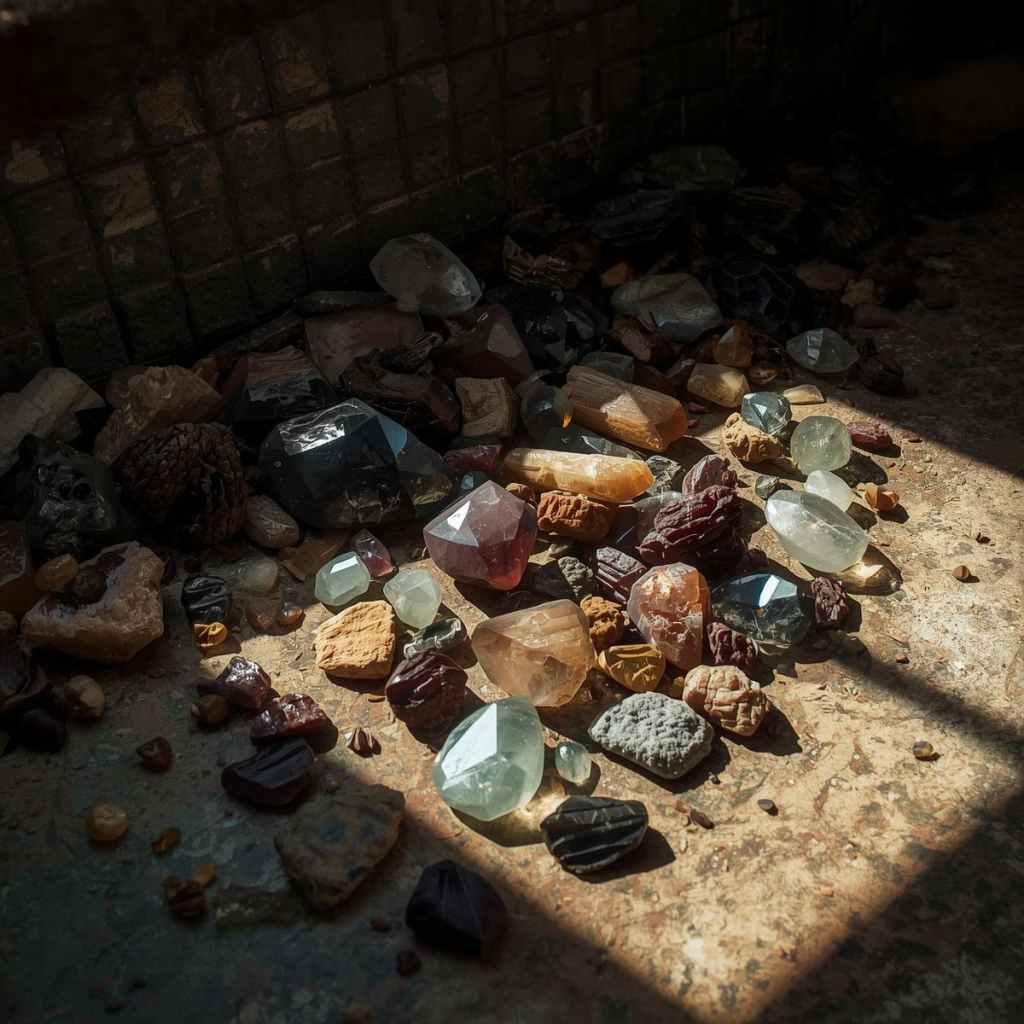
- Symbolic reflections with crystals
Final Thoughts: Modern Medicine and Shamanic Approaches Can
Coexist Let’s be clear:
Modern medicine is indispensable. Diagnosis, treatment, emergency care, medication, and surgery save lives.
Shamanic healing, however, operates in an entirely different realm:
the search for meaning.
The balance of the spirit.
The rediscovery of inner rhythm.
We do not reject modern medicine; we do not stand against it, but rather alongside it.
One speaks the language of science; the other, the language of symbols.
Both touch the human spirit—just through different doors.
And perhaps what we call healing is the realization that all doors open to the same place.