FREE SHIPPING on orders of 4,000 TL or more



Blog
Simana’s Diaries – 24 – The Spirit of the Hunt 1

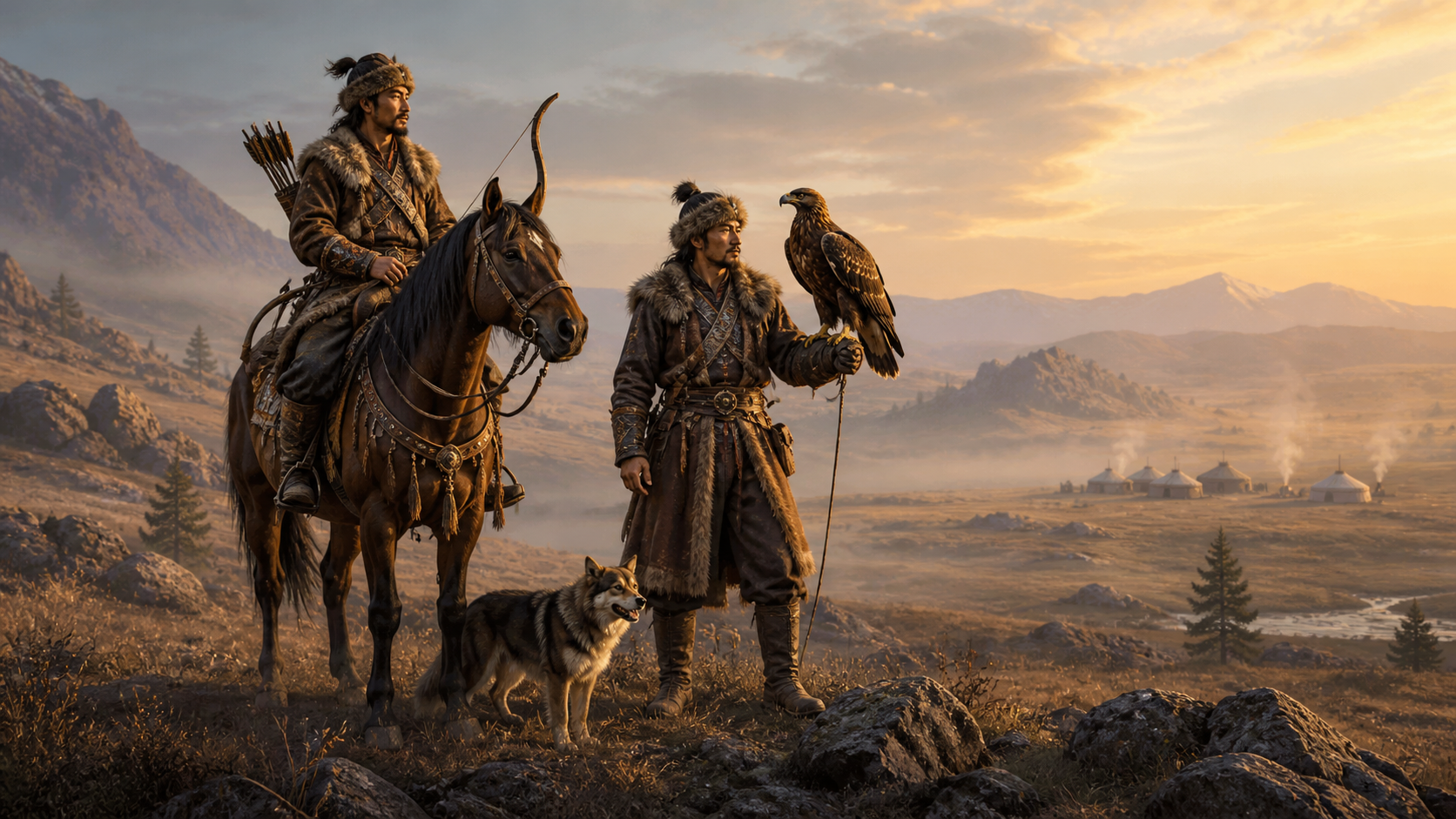
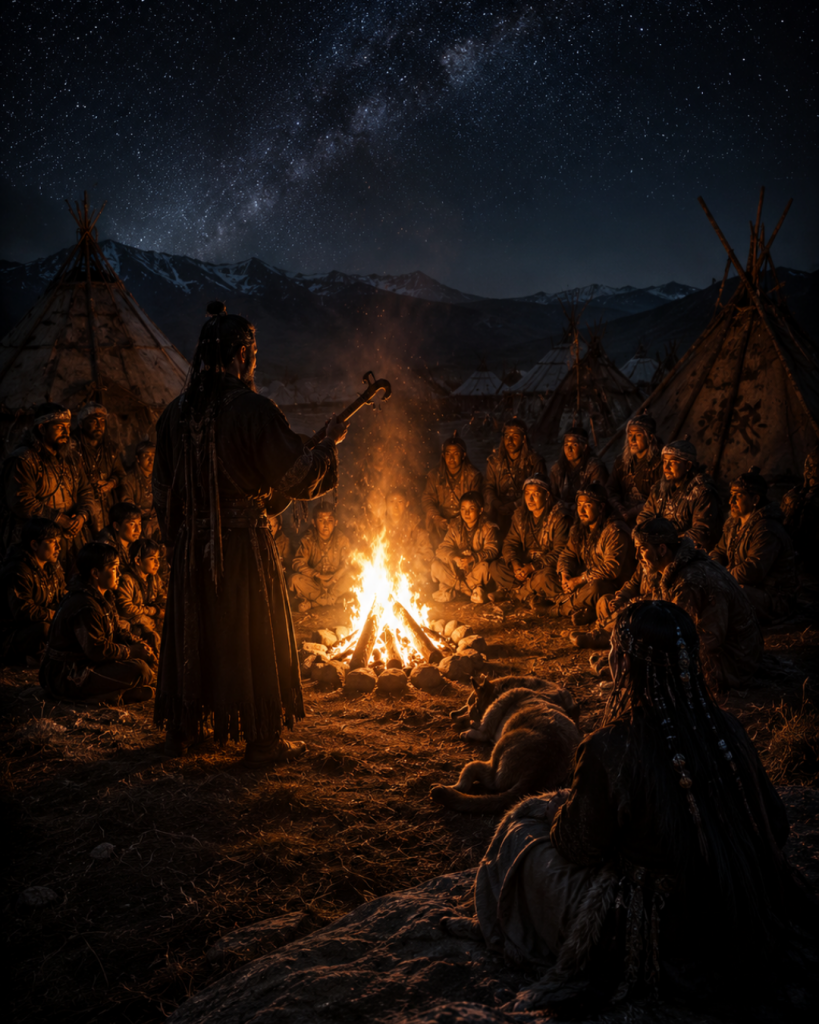
In those days when winter had not yet fully closed the door, but the nights were growing longer and the wind’s teeth were slowly sharpening, the people of the camp began to commemorate the hunt by passing the name from gaze to gaze around the fire—as if circulating not the word itself, but its intent—rather than speaking it aloud.For the tribe, the hunt was the name of an ancient exchange entered into through an unseen order, and in this exchange, a person had to know not what to take, but what they were worthy of taking.
Not everyone spoke this truth aloud, but everyone knew it: nature does not sanction what is forcibly torn from it; it permits only what is given willingly. That is why, before the hunt, before the weight of what was to be taken, the righteousness of what was to be given was considered. The silence of the elders sitting by the fire tempered the young people’s impatience; even a glance, a nod, or a held breath served as a reminder that the approaching hunt was a sacred encounter.
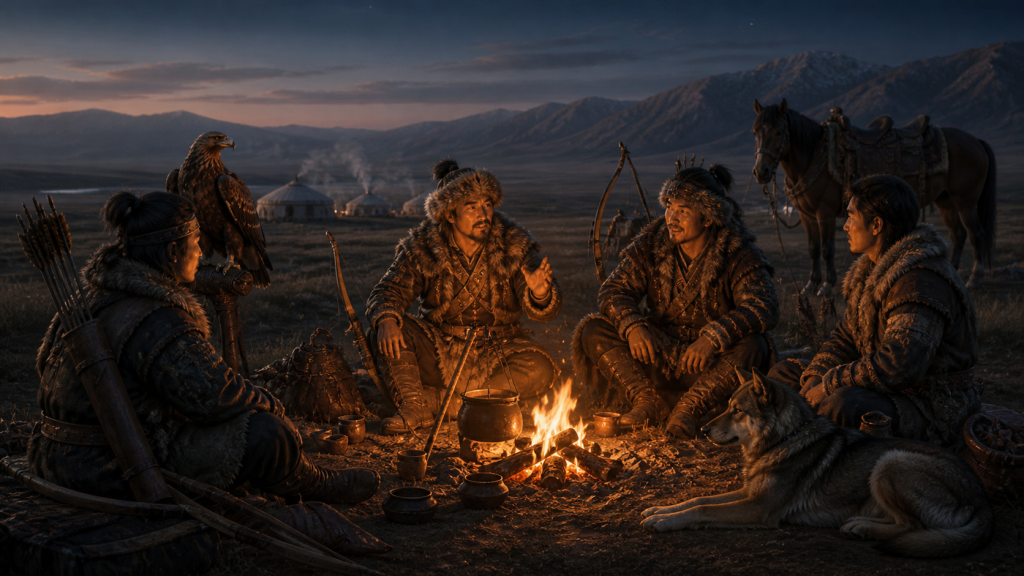
As the men prepared, no one stirred up panic, and no one spoke an unnecessary word; for panic takes precedence over intention, and if the intention wavers, the path is blocked. The bows were carefully inspected, the strings drawn taut; as the feathers—the “yülek”—were straightened, each was touched with a fingertip, as if preparing a comrade. Knives were drawn from their sheaths, their sharpness tested, but even that dry sound was not prolonged. They all knew that to enter the forest, one must first shed the weight of words, and then the weight of sound.
Some tied a small leather pouch to their belts; inside were dried meat, a piece of fat, and a handful of salt. This was not for food, but to be returned if necessary. Some hunters would speak inwardly to the spirit of the animal they were about to hunt before setting out, murmuring, “If you do not come, we will go hungry, but if you do come, we will send you off with honor.” They had learned from a very young age that the hunt was an invitation. And in this invitation, one’s intention was tested before one’s skill, and one’s measure before one’s strength.
Before setting out, each of them took a brief journey inward; some closed their eyes, some scattered their thoughts by gazing at the smoke from the fire, and some did nothing at all—they simply waited. The old hunters knew that when entering the forest, a person could not take a single step without leaving behind the excesses within themselves. That is why that night, there was neither laughter nor idle talk; some even avoided discussing the next day’s hunt. For everything spoken reached the forest’s ears, and the forest never forgot how it was addressed. And so, even before setting out, the hunt was already considered to have begun.
Simana, watching their faces in the light of the fire, heard not what was said but what was left unsaid; some glances were measured, while others were too eager, too quick—and that haste betrayed a person’s intent before their foot even moved.
No one even heard the thought passing through her mind, but even if the ritual was correct, if the intent strayed, the path would recede. This realization sparked a hesitation within her; for the discord she saw was more than just the fire of haste burning within a few individuals—it hovered over the entire group like a thin wisp of smoke. Still, she did not remain silent. She had seen time and again that sometimes maintaining balance is possible only by allowing the process to run its course and letting the truth reveal itself.
Oban’s insistence had hardened under the pressure of the approaching winter; though the words were not spoken aloud, the same thought circulated within everyone: “If we delay, we will be diminished.” When Simana felt the weight of this thought, she realized that the ritual would no longer be merely a call, but also a test.
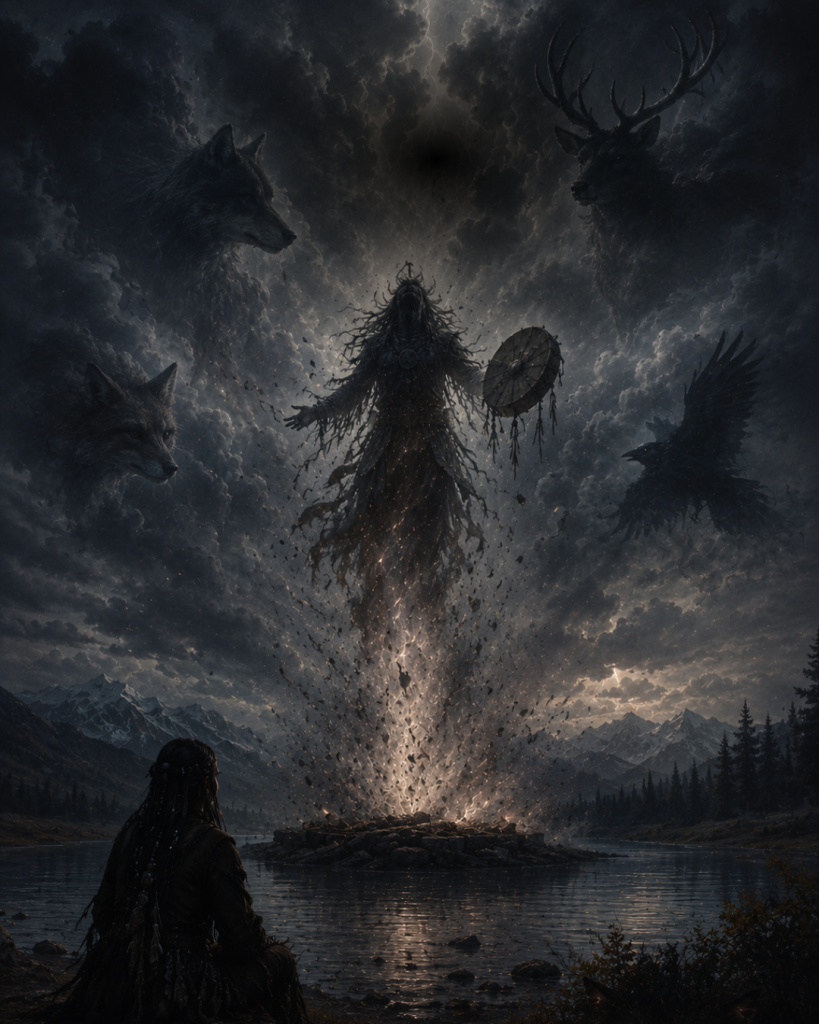
The fire flared up again. As juniper branches were laid upon the embers, the rising smoke seemed to spread in all directions, as if reaching out to touch unseen beings. Simana rose slowly to her feet, turning her face first to the east, then to the west, followed by the north and south; with each turn, her words were brief but knew their place. She called out to the lord of the mountain and addressed the lord of the forest; she reminded them that the price for what was taken would be paid, that nothing more would be asked for, and that the hunt was not a display of power but a quest for consent. The meat, milk, and butter placed at the fire’s edge were the seal of an agreement. Then she took her drum in hand; the first beat was soft, the second deeper, and by the third, the sound found its place.
Yet even within the flow of the ritual, Simana sensed something missing. The words were true, the movements were in their proper place, but the hearts of some among them did not keep pace with their steps. Some hunters had closed their eyes, but their minds were on the spoils ahead; some had bowed their heads, but the restlessness within them had not subsided. Simana sensed this discord even in the drum’s vibrations. Still, she did not interrupt the ritual. For she knew that to understand these truths, one had to see the outcome, and nature would eventually make it clear how she was being approached.
They set out before dawn had touched the earth; the moon hung over the steppe like a thin veil, scattering its light as if sparingly. Their steps were cautious. As they approached the edge of the forest, the air suddenly grew cooler and deeper, and the dark silhouettes of the trees stood before them like a boundary line. At that very moment, without anyone speaking aloud, everyone made the same decision within themselves: They stopped.
Simana stepped forward, scattered the small grains of salt and dry bread crumbs in her palm onto the ground; then, bowing her head slightly, she greeted the guardian of the forest—a greeting that was more of a plea than a word: “We have come, for what we need.” Then the others repeated the same gesture; some more consciously, others out of habit, but none could deny the gravity of the moment.
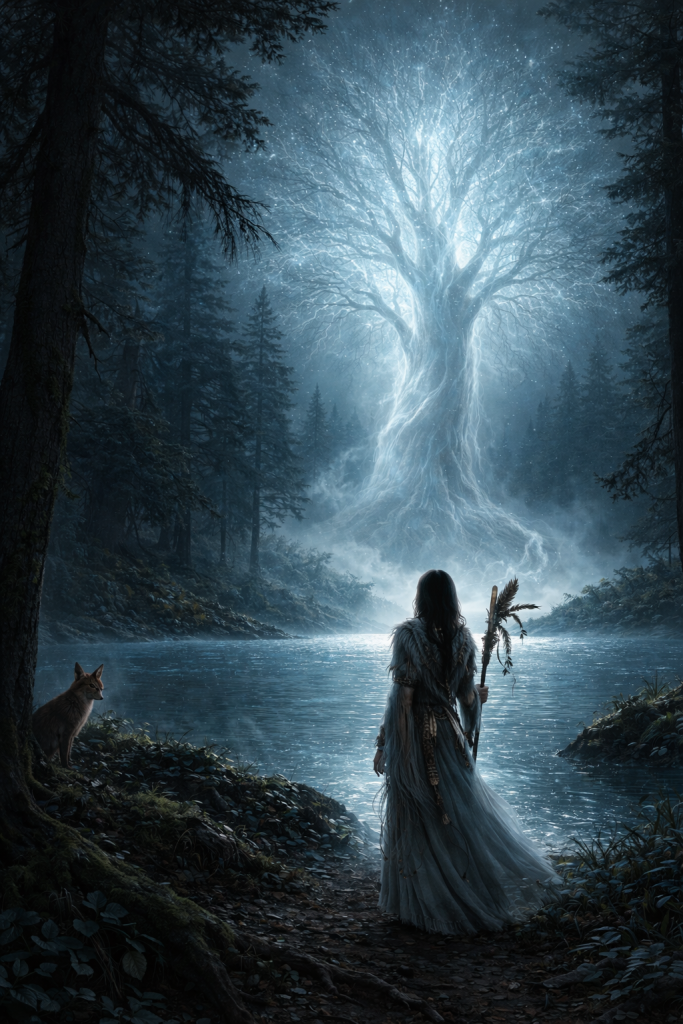
As they stepped inside, the forest weighed them before letting them in. The sound of the wind passing through the branches changed; the rustling of the leaves ceased for a brief moment, as if a gaze were gliding out from within the trees and sweeping over them. A few steps later, an obo—a pile of stones stacked one on top of the other—appeared at the side of the path; everyone turned toward it. Each hunter took a small stone from his pocket and placed it on the pile; this stone was both a sign of respect and a silent way of saying, “I am passing through here, but I do not belong here.” As the stones were placed, the invisible tension within the forest softened; the trees no longer looked like a wall, but like a path. The conversations ended. In the forest, the shadows hear the words, the earth remembers them, and a person gives themselves away with every word they speak. As they moved forward, the forest slowly opened up, and this opening was as silent as a permission, as deep as an acceptance.
After
a while, one of them spoke without saying it outright: “The Aba might be nearby.” This remark was more of a reminder than a warning. No one said “bear”; for that name did not merely summon an animal, but also awakened an ancient tale.
According to the stories told in the lands of the Altai and Sayan, the bear was once an ancestor who lived in human form, but, overcome by his rage, walked into the forest, where, over time, his fur thickened and his tongue fell silent, transforming him into another being; which is why they addressed it not by its name directly, but as “Aba,” “Kocaoğlan,” “Karaoğlan,” or even “Aba-Kan” in some villages. These forms of address stemmed more from kinship than from fear; for it was believed that the bear could understand human speech, never forgot what was said, and would remind them when necessary. For this reason, hunters would change their speech in places where a bear might be—using indirect speech instead of direct words, and sometimes remaining completely silent; they had learned that in the forest, every word leaves a trace, and some traces find their way back to their owner.
The bear cult was less a mere belief than a way of life. Hunting a bear was not considered an ordinary hunt; it was regarded as an encounter, even a test. If a bear was killed, it was not seen as a victory but as a heavy responsibility; one would approach its head, offer an apology, and address it just as one would a relative being sent off. Its meat was used, but respect was never compromised; care was taken with its bones, certain parts were left in nature, and great care was taken not to block the path of its spirit. They believed that the bear’s spirit saw what was done, heard what was said, and would return if necessary. For this reason, the hunter would never express unbridled joy or utter a word of contempt toward it. For these people making their way through the forest, the bear was a silent yet imposing presence that served as a reminder that the ancient bond—where the past, nature, and humanity intertwined—had not been severed.
When they reached the clearing, before the day had fully settled upon the earth, a fire was lit; as dry branches crackled and burned, juniper twigs were placed atop the embers, and the rising smoke spread out as if to draw the attention of all living things. Simana walked through the smoke, turning east, west, north, and south; with each turn, her words were brief, yet the meaning they carried went beyond what was spoken. Her voice deepened as she addressed the lord of the mountain and softened as she turned toward the lord of the forest; every being awaited an address suited to itself.
Those standing around the fire bowed their heads; the smoke veiled their faces, and in that moment, everyone seemed to have found their place within the same rhythm; yet Simana sensed that this harmony was only superficial—that something still scattered deep within had not risen with the smoke.