FREE SHIPPING on orders of 4,000 TL or more



Blog
Simana’s Diaries – 26 – Kayçı

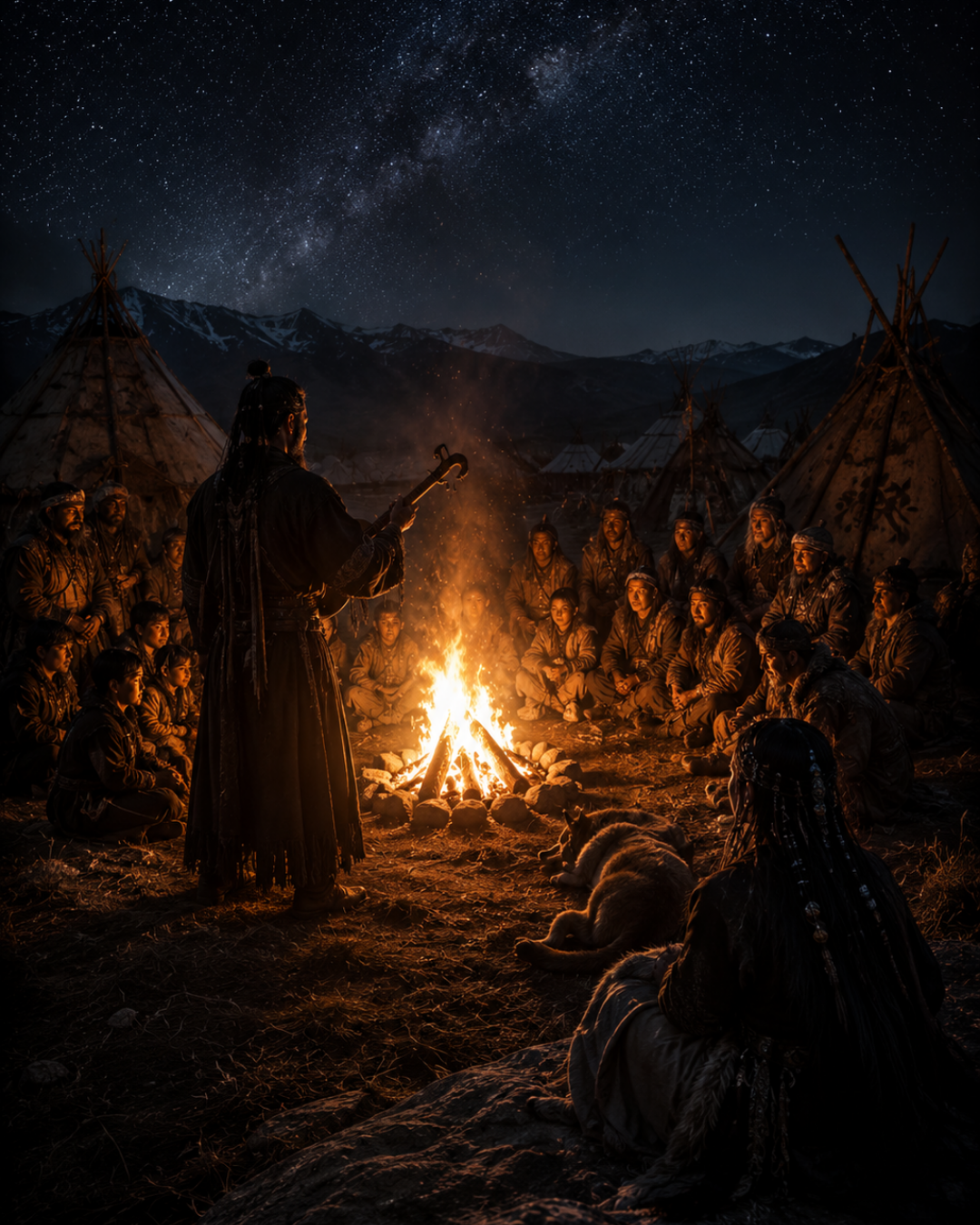
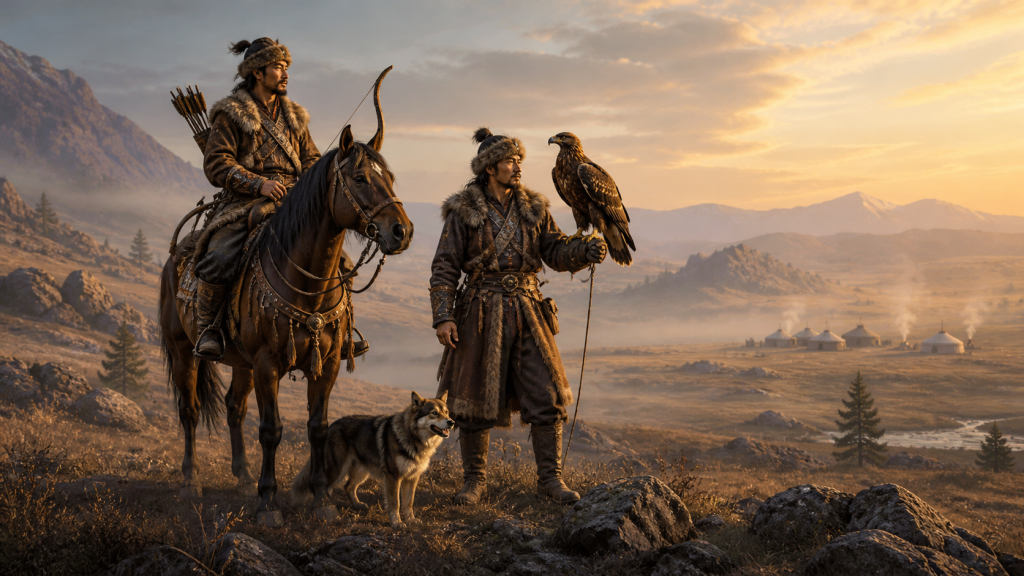
A few days had passed since their return from the hunt, and the camp seemed to be taking a deep breath for the first time in a long while; meat was boiling again in front of the tents, the children had started chasing each other, and the harsh lines on the elders’ faces had softened slightly in the light of the evening fires. The wind, blowing through the mountains, carried not the scent of hunger this time, but the smell of dry grass and smoke. The women were cleaning the hides and removing the needles from the bones; the men were mending the worn-out straps; and the dogs were stretching out on the ground to soak up the sun’s last warmth. The day was slowly turning into evening; as the copper-colored sky cast its glow upon the tents’ goatskin, the encampment, viewed from a distance, looked like an old fairy tale laid upon the earth.
Just then, the sound of a child’s voice was heard from the trail on the northern slope. At first, only footsteps could be heard—the sound of small steps striking the dry earth rapidly… Then the child, breathless, darted into the circle of fires. His face flushed with excitement, his hair tangled by the wind. For a moment, he couldn’t speak; he placed his hands on his knees to catch his breath, then raised his head, his eyes widening:
“Kayçı is coming…”
These words swept through the village like an invisible wave. The women’s hands slowed. The elders raised their heads. The children’s eyes suddenly lit up. For the kayçı’s arrival was no ordinary visitor’s arrival. When he arrived, it was not as if an ordinary man had come. With him came the echoes of ancient battles, the shadows of forgotten ancestors, unfulfilled oaths, and heroes whose names are no longer spoken. The storyteller did not merely tell stories; he blew on the ashes of the past, making the embers within them visible once more.
Evening preparations began in earnest. The fires were stoked; large cauldrons were hung once more, and the meat was left to simmer slowly. The children jostled each other to claim the spots closest to where the storyteller would sit, while the women smoothed out the rugs and cleaned the old copper bowls set aside for the guest. But what was most striking was the silence of the elders. For they knew that when a good storyteller arrived, one’s ears would hear not only an epic but also the voices of their ancestors.
As the day retreated behind the mountains, the sky’s color gradually darkened; first to copper, then to ash, and finally to the darkness of a piece of iron concealing its own embers. At that very moment, a silhouette appeared where the northern road curved. At first, only the horse’s slow footsteps were discernible; then the wind carried the scent of a foreign path to the camp. The children were the first to notice. They nudged each other and jumped to their feet; the women turned from their cauldrons to look; the dogs growled briefly and then fell silent. They sensed that there was an inexplicable yet immediately palpable heaviness surrounding the newcomer—as if the dust of long roads had seeped even into his shadow.
Kayçı approached slowly. The dark-colored caftan he wore seemed to have absorbed the color of the wind and smoke. The fur of the old wolf pelt draped over his shoulders was graying in places, and the road dust clinging to the hem hid the fabric’s true color. Attached to the leather belt around his waist were small bone fragments, copper rings, and bundles of dried grass; as he walked, they clinked lightly against one another, producing a sound so faint it was almost inaudible. On his back, he carried a topşur darkened by the passage of many years; the surface of the wood shone where his fingers had touched it, and its strings quivered like a slender river in the nightlight. His face wasn’t exactly old, but around his eyes were those deep lines that some people carry. And his eyes… Even as he looked at the person in front of him, it was as if he were listening to a sound coming from somewhere else.
When the people of Oba saw him, they rejoiced. People loved the kayçı because when he came, the nights grew longer, forgotten names were heard once more around the fire, and the shadows of the dead would sit among the living for a brief moment. And on such nights, one would sometimes forget that they were sitting by the fire and find themselves transported to a much more ancient time.
When Kayçı reached the fire, he didn’t sit down right away. First, he looked around; he watched the children’s excitement, the elders’ silence, and how the smoke rose for a long time. Then he placed his topşur on his knees and ran his fingertips along the strings. No melody had begun yet, but even that dry, deep vibration was enough to gradually quiet the murmur within the camp. For everyone knew that the kayçı’s voice did not emerge from the mouth like an ordinary human voice; it was born in the depths of the chest, in the dark space between a person’s breath and their bones, then struck the throat and expanded like the echo of an ancient cave. That is why the Altai people called the recitation of epics “kaylamak”; for kaylamak was less about putting the epic into words than about summoning it anew.
The elders used to say that true skiers did not learn their epics solely from their masters. One night, a mountain spirit or a water spirit would enter their dreams; sometimes as a voice rising from an icy river, sometimes as an ancient shadow amidst the mist, and sometimes as a bird singing ceaselessly throughout the night—leaving the first melody of the epic in their ears. From that moment on, the storyteller would change; for what they now carried was more than just words—it was the truths of the unseen world. That is why storytellers were taken to battles, walked alongside hunters during long hunting rituals, and even received an equal share of the hunt. For it was believed that the spirits of the forest loved beautiful stories; it was said that when a good epic was told, the wind would soften and the game would reveal itself more easily. And some elderly hunters would swear that a kay told in the quietest moment of the night reached farther than the tip of an arrow.
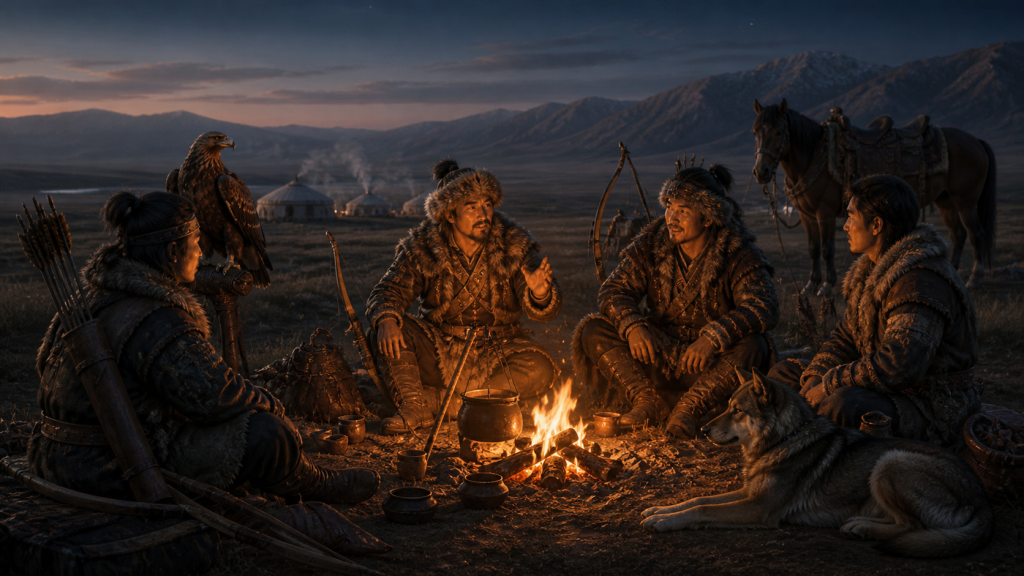
As the fire grew, the night began to settle more heavily over the camp. Large cauldrons bubbled slowly over the embers, and the scent of simmering meat mingled with the juniper smoke, spreading among the tents. The women passed around the kumis bowls one by one, while the children jostled to sit in the front row; yet the atmosphere was different from their usual feast nights. Laughter was brief, and people instinctively lowered their voices as they spoke. For what was about to begin was more than just entertainment—it would be the re-emergence of the past. They arranged themselves in a half-moon around the fire; the elders in the front, the battle-hardened men beside them, the young people a little further back, and the children crouched down, hugging their knees, staring unblinkingly at the fire.
Simana sat a little apart from the crowd, in a spot not quite bathed in the light. She had drawn her knees up to her chest and draped a dark-colored fur over her shoulder. As the firelight fell on her face, a quiet serenity—the kind carried by those returning from a long journey—began to appear in her eyes. A faint smile played at the corners of her lips; for she recognized that familiar feeling that had settled over the camp with the arrival of the kayçı. He sensed that people were preparing to step out of their own time, if only for a while, and enter a greater time. He enjoyed the children’s excitement; for he knew that what they were about to hear was the kind of sound that settles deep within a person and returns unexpectedly at night, even years later. And that they would one day tell their children and the young people what they had heard…
Kayçı finally approached the fire and sat down on the ground with slow, deliberate movements. He didn’t start right away. First, he held out his palms toward the fire and stared at the flames for a while, as if reading an invisible sign. Then he placed his lute on his knees. He plucked the strings one by one; the sounds that emerged were thin, dry, and cut short. With every touch, he pricked up his ears, sometimes tilting his head slightly to the side, as if listening to the echo behind the sound. The hum in the hut gradually subsided. The children fell silent. The dogs tucked their heads between their paws. Even the howls of wolves in the distance ceased.
And then the kayçı let out his first sound from the depths of his throat.
This did not sound like the voice a person uses in everyday speech. It was as if a dark river, trapped between the stones, were speaking from deep within a very ancient cave. The sound came from deep within at first, then expanded; it passed over the fire and spread into the night. Everyone in the hut felt the same thing at that moment—the night had now begun.
The strings of the topşur vibrated. Kayçı kept his eyes half-closed and began to play in a heavy rhythm:
“Under the Sky of Tengri…”
Yağız is up there…
While the waters are still young…
Back when the shadow of the mountains didn’t fall quite as heavily as it does today…
“People’s words are as young as stones…”
The words felt more like a call than a narrative. The night above the camp began to change; the firelight grew dimmer, and the wind began to blow more slowly through the tents. Kayçı spoke as if he were following not his own voice but a very ancient echo. He paused briefly after each sentence, gently touching the strings of his topşur in that silence, then continued.
And then, he said the name of the first chamber.
“Listen now! This is the epic of Irkıl Ata, the world’s first sage and master of spirits!”
As the name passed over the fire, Simana felt a faint shiver rise between her shoulders.
Kayçı continued speaking:
“His name was Irkıl… He drew knowledge from the silence of the mountain… He could sense the scent of illness before the body had even begun to decay… He was the first shaman to journey to the gates of the heavens and return…”
Topşur’s voice deepened.
“Since the world began, neither the depths of the earth nor the layers of the sky were known. People fell ill and could find no cure; they died, not knowing where they were going. In that era, a mighty light fell upon the earth. From that light, Irkıl was born.”
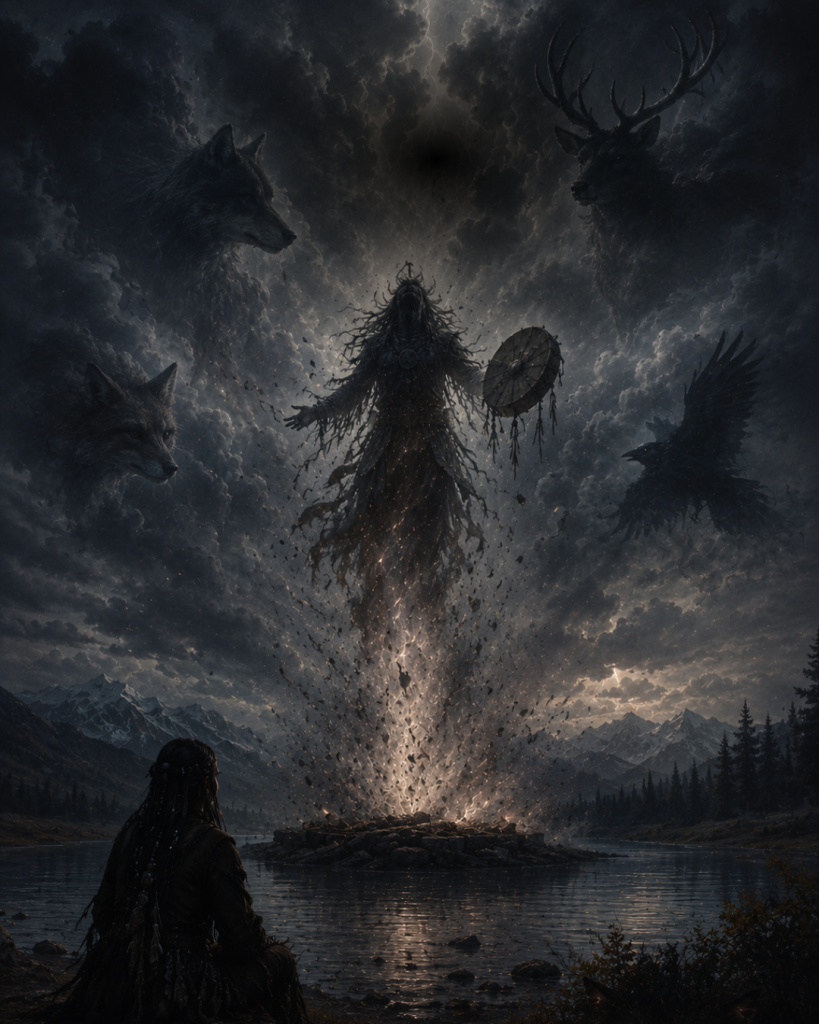
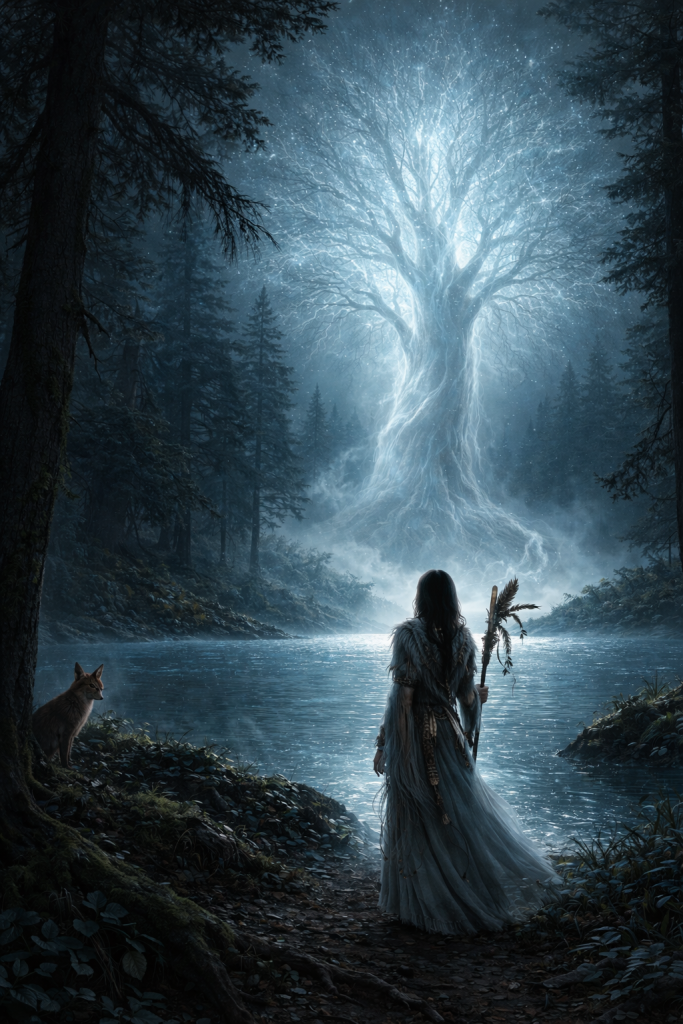
Gök Tengri bestowed wisdom upon Irkıl’s chest and the power to see the unseen upon his eyes. He became the first Kam, the first shaman, of the earth. He stood with the mighty white aspen tree behind him and struck his sacred drum:
“Boom! Boom!” the mighty mountains roared.
“With the first beat of the drum, the evils beneath the earth were subdued, and the good spirits in the heavens descended to earth.”
Kayçı fell silent. The fire crackled.
“They say that if a child’s eyes went dark on the day they were born, Irkıl would place his hands on the child’s face and pull the darkness away through his fingers. When she sprinkled water on the forehead of a patient lying in the throes of fever, death would wait at the threshold but dare not enter. And they also say that if a person’s soul leaves the body too soon, Irkıl takes her drum, ascends to the paths of the heavens, and walks in pursuit of that soul.”
Then his voice grew even quieter.
“One night… the mother of a dead child came to Irkıl’s tent. The woman had wrapped her son’s body in a wolf pelt and carried him in her arms. Snow clung to her face. Her breath smelled of blood. And after listening to that woman’s weeping, Irkıl sat in front of the fire for a long time without saying a word.”
The strings of the Topşur trembled one by one.
“Then he stood up. He picked up his drum.
And he said, “If the path is not yet closed, I will bring him back.”
One of the children in the room involuntarily snuggled up to his mother. Kayçı continued:
“That night, Irkıl emerged from the fire of the living and walked into the darkness of the dead. They say he wandered through the lower realms of the sky, descended as far as Erlik’s gate, and spoke with the shadows to bring his spirit back. And when morning came, the child breathed again…”
The sound of the kayçı did not rise here.
On the contrary, it took on a heavier, deeper tone.
“That was the day people began to fear him.”
Because people are drawn to those who heal…
“But one cannot look upon the person who has returned from the path of the dead with ease for long.”
The lute player plucked the strings of the lute a bit more forcefully this time. The sound leapt over the fire and spread into the night; it was as if stones were clattering against one another in a distant valley, and ancient doors deep beneath the earth were slowly opening. Then the lute player raised his head and, fixing his gaze on a place beyond the flames that no one could see, continued speaking:
“He walked with a spring in his step… And as he walked, his name grew.”
He was now the shaman not only of his own tribe but also of the distant steppes. Patients traveled for days to reach his tent; mothers unable to bring down their children’s fevers, elders awaiting their final breath, and warriors who had left half their souls in the darkness all knelt before him. They say that when Irkıl looked into a person’s face, he saw the shadow of illness; when he heard someone’s voice, he also heard the crack within their soul. That is why people began to seek from him not only healing but also the secret of their destinies. For while some shamans cured illness and others showed the way, Irkıl could even call forth by name the darkness hidden within a person.”
Kayçı fell silent for a brief moment. The strings of the Topşur trembled ever so slightly.
“And time passed…”
“Irkıl’s name rose to the nine heavens. Even seven layers beneath the earth, his name was spoken.”
Now even lords and rulers feared him. If a child’s fever would not subside, word was sent to him; armies awaited his signal before battle; hunters sought his blessing before setting out. They say that when Irkıl spoke, the mountains echoed late—for they waited for him to finish his words. The fire in his tent would die out later than usual. When he looked at the water, still lakes did not merely reflect his face—they revealed his depths as well. And on some nights, as the stars shifted, the sound of a drum would rise from Irkıl’s tent, and people could not tell whether that sound was heading toward the sky or deep into the earth.
The children in the room were now listening with bated breath.
Kayçı slowly leaned forward.
“But…”
That single word transformed the atmosphere around the fire.
“If a person keeps going to the door of death and coming back for a long time… one day they begin to believe that door belongs to them.”
Topşur’s voice deepened.
“Irkıl went through the same transformation. At first, he saw only people’s fears; then he realized that their fears had yielded to him. At first, he spoke with spirits; then he saw that he could summon their voices. At first, he asked fire for permission; then he began to believe that the fire listened to him. And it was then that he came to believe that the power passing through the heavens was born from within himself.”
Kayçı slowly shook his head from side to side.
“The Way of the Tao is a subtle path.”
Once a person mistakes themselves for the path…
“The bridge beneath his feet begins to burn silently.”
Suddenly, the fire crackled. One of the children flinched. Simana, however, sat there without taking her eyes off the fire; for she sensed that within the story being told, it was not merely an ancient spirit that walked, but the oldest ailment of the human soul.