FREE SHIPPING on orders of 4,000 TL or more



Blog
How Do Scents Affect Our Mood? Natural Scents, Memory, and Emotional Well-Being

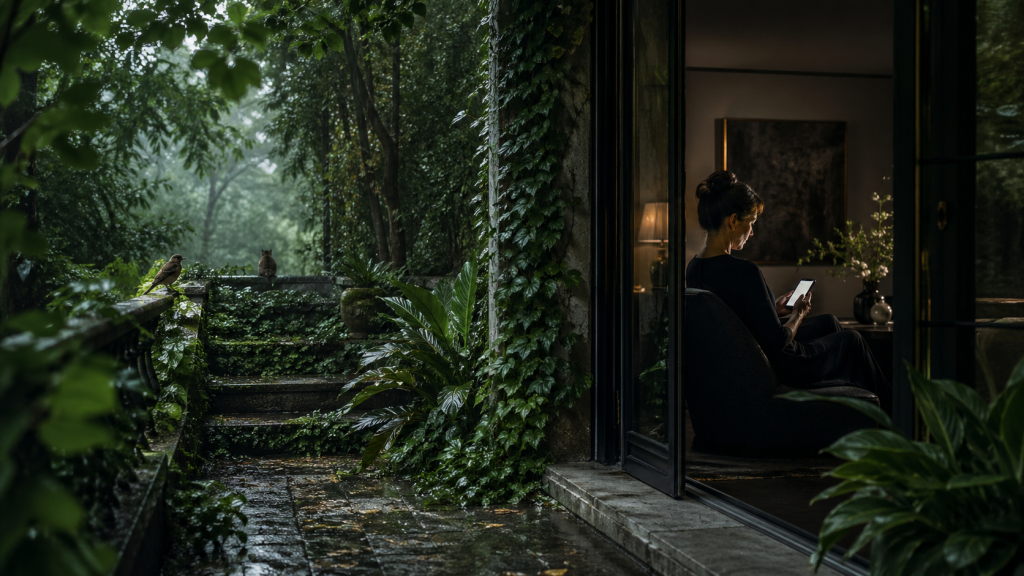
How Do Scents Affect Our Mood? Natural Scents, Memory, and Emotional Well-Being
The cool morning scent of a rose, the earth that deepens in scent after the rain, rosemary that awakens when touched, the soft green scent of jasmine that evokes memories of old homes, the calmness of lavender that gently settles into the nervous system…
These are not merely pleasant scents. They touch a place deep within us. Because scent, unlike other senses, does not operate at a distance. To see, you must look; to hear, you must listen. But scent often arrives uninvited; it enters in an instant, touches the memory, shifts an emotion, and brings to light a time the mind thought it had long forgotten.
That’s why the question of how scents affect our mood isn’t just about aromatherapy. This question concerns memory, emotion, stress, the body, our connection to nature, and emotional well-being.
Modern people live in a world filled with scents; but more often than not, these scents aren’t alive. Detergent, plastic, a closed room, perfume, air-conditioned air, cleaning products… They all carry a kind of “scent,” but they don’t all affect people the same way.
Natural scents, on the other hand, work differently. They don’t impose themselves. They invite you to approach them. They invite you to touch a leaf, to walk slowly past a flower, to bend down toward the earth after the rain.
Perhaps that’s why the scents of nature awaken not just a sense within us, but also an ancient connection.
The Relationship Between Scent and Memory: Why Does a Scent Instantly Transport Us to the Past?
When you smell a scent, you’re sometimes transported back to a memory without even realizing what it is.
A summer evening…
A grandmother’s garden…
Wet stones…
Freshly watered flowerpots…
Lavender warmed by the sun…
The dirt that used to get on your hands as a child…
This is no coincidence. The connection between scent and memory is one of the strongest sensory bonds in humans. A scent works faster than a mental explanation. First comes the sensation, then the memory. First the body recognizes it, then the mind puts a name to it.
That’s why some natural scents calm us, some invigorate us, and others create a sense of softness within us for reasons we can’t quite explain. The psychological impact of scents begins right here: A scent doesn’t stay just in the nose; it blends with memory, emotion, and the body’s response.
Fragrant plants—such as the scent of earth, roses, jasmine, lavender, rosemary, thyme, and mint—are powerful because they evoke associations, a sense of security, and bodily awareness in people.
Sometimes a scent says:
“You’re here.” “You’re
safe.” “You can
slow down.”
How Do Natural Scents Affect Our Mood?
The effect of natural scents cannot be summed up in a single sentence. Because the scent of every plant opens a different door.
Lavender is associated with a sense of calm and relaxation in most people. Its scent is sharp but not harsh; it helps slow down the mind. The rose works from a more emotional place. Its effect on people is not merely a floral pleasantness, but an inner softening. Hyssop is a transitional scent that evokes memories of old stone courtyards, windowsills, and the coolness of morning. Rosemary, on the other hand, is more distinct; it’s like a sharp, green line that clears the mind of fog and sharpens focus. Thyme is closer to the earth. It has a warm, dry, resilient scent that grounds the body.
None of these scents stands alone in nature. They coexist in the garden. After the rain, the scent of the earth provides a deep foundation beneath them. When the wind blows gently, one scent does not mingle with another; it simply alters the garden’s overall spirit.
This is where the effect of natural scents becomes apparent. Scent alters the environment. When the environment changes, so does a person’s mood.
Sometimes, when you step into a garden, you can’t explain why you feel so relaxed. Yet your body has already provided the answer. The green scenery, the moist air, the scent of the earth, the plants’ volatile compounds, the silence, and the birdsong all work together.
Emotional well-being often begins this way: not with a grand explanation, but with a small sensory shift.
What Does Research Say? Natural Scents and Therapeutic Gardens
We’re not just talking about intuitive knowledge here. The effect of natural scents on human mood is also being explored in nature-based rehabilitation studies.
A study on the Alnarp Rehabilitation Garden in Sweden examined a 12-week nature-based rehabilitation program for individuals experiencing stress-related mental challenges. In this program, which incorporates practices such as garden therapy, psychotherapy, occupational therapy, and physical therapy, participants are interviewed about their experiences with the garden’s scent environment. The study reports that natural garden and plant scents are associated with joy, calmness, happiness, and positive memories, while artificial scents may be found by some individuals to be irritating and stress-inducing.
One of the most striking aspects of this research is that scent is evaluated not merely as a pleasant detail, but as an integral part of the process of mindfulness and stress reduction. Participants state that slowly inhaling the scent of plants and soil helps them focus on the present moment, while touching scented plants can become a conscious practice of calming down.
The study also notes that natural scents are powerful memory triggers. Garden scents can remind participants of time spent in the garden during childhood, memories associated with family elders, and more peaceful periods. This demonstrates that scent affects not only one’s current mood but also the emotional connection to the past.
These findings remind us of something important: A garden’s healing power lies in the unseen—in the scent of the soil, the leaves, the flowers, and the moist air.
The Scentscape: A Garden’s Invisible Healing Layer
When we think of a garden, we usually imagine its colors, flowers, trees, and layout. Yet one of a garden’s deepest layers is invisible: its scent. We can call this invisible layer the “scentscape.”
A garden’s scent landscape consists of the scent of the soil, the green breath of the leaves, the volatile aromas of flowers, resins, fruit trees, moisture, and the traces carried by the wind.
This scent landscape is not static. It is different in the morning, different at noon, different after the rain, and entirely different on a summer evening. Lavender becomes more pronounced in the sun. The scent of the sweet clover leaf unfolds when touched. Rosemary waits for the touch of a hand. A rose smells different in the cool of the morning than it does in the late afternoon. And after the rain, the scent of the soil rises like the underlying bass note of the entire garden.
That is why a garden is not merely seen—it is breathed in.
And when a person truly breathes in a garden, they begin to realign their own inner rhythm.
The Difference Between Natural and Artificial Scents
Today, much of our olfactory world is surrounded by artificial scents: cleaning products, room fresheners, strong perfumes, car air fresheners, the air in enclosed shopping malls… While these may sometimes give the impression of freshness, they are often far removed from nature’s complex and gentle scent structure.
Natural scents, on the other hand, are more layered. They don’t overwhelm everything at once. Rather than taking over a space, they unfold within it.
The scent of a rose invites you to approach.
Rosemary invites you to touch it.
The scent of earth awaits the rain.
A lily-of-the-valley leaf awakens in the palm of your hand.
Artificial scents are often designed for consumption; natural scents, on the other hand, foster a connection. This distinction is important for emotional well-being. Because coming into contact with a natural scent often changes behavior as well: People slow down, bend down, touch, wait, and breathe.
These small movements take the mind out of its rush.
This is one reason why natural scents affect our mood. They work not only through their chemical components but also through the behaviors they invite us to adopt.
The Language of Scent in Simana’s Lands
At the foothills of Mount Uludağ, in the Lands of Simana, scent is never alone.
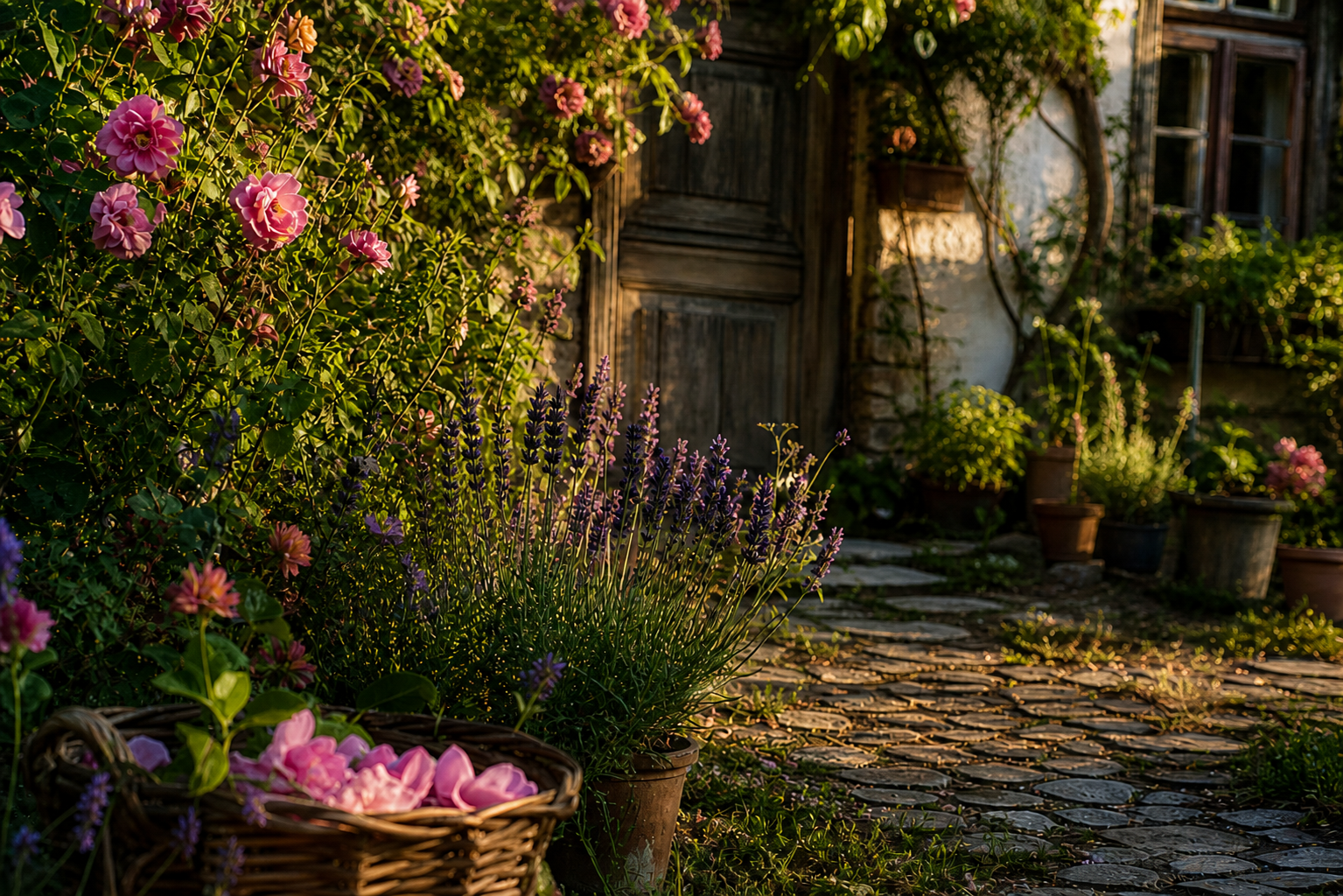
After the rain, the earth deepens in color. Water droplets on the leaves catch the light. The rose smells heavier, the jasmine greener, the rosemary sharper. Thyme emerges like a warm, dry line rising from the earth. Even if the lavender hasn’t fully bloomed yet, it makes its presence known.
Each of these scents plays a distinct role in the garden.
The earth reminds us to slow down.
The rose softens the emotions.
The rosemary focuses the mind.
The sweet violet opens a door to an old memory.
The oregano grounds the body.
The lavender suggests a calmer rhythm to the nervous system.
In the Lands of Simana, scent is not merely an aesthetic detail. It is a way of thinking. Through scents, people do not merely recognize nature; they enter into a relationship with it.
That is why, for *Terra di Simana*, scent is not merely about smelling good. Scent is a silent door that opens, allowing people to reconnect with nature, the body, and memory.
A Small Ritual of Well-Being with Natural Scents
You don’t need a complicated routine to experience the effects of natural scents. Sometimes the most powerful rituals begin with the simplest of touches.
Step into a garden after the rain or in the early morning hours. If you don’t have a garden, a pot, an aromatic plant, or even a park path will suffice.
Stand next to a plant. Don’t pick it right away, don’t smell it right away. Look first. Notice the texture, color, and posture of the leaf. Then gently bring your hand closer. If it’s an aromatic plant like rosemary, thyme, oregano, mint, or lavender, gently rub the leaf and notice the scent that unfolds at your fingertips.
Take a deep breath. Ask yourself this question:
“What has this scent changed in me?”
Maybe it brings back a memory. Maybe it clears your mind. Maybe it slows your body down. Or maybe it just makes you feel good.
Even that much is valuable. Because the connection we form with natural scents often begins not with a major transformation, but with a small moment of awareness.
The Psychological Impact of Scents: From the Garden to Everyday Life
The psychological impact of scents doesn’t have to be limited to the garden. People can incorporate natural scents into their daily lives as well.
Touching a jasmine leaf at home, keeping rosemary on your desk, getting close to lavender in the evenings, opening the window after the rain, or taking in the scent of a rose without rushing… These are all small but powerful sensory experiences.
These moments create small pauses against the fast pace of modern life.
Emotional well-being doesn’t always come from grand solutions. Sometimes it’s strengthened by small, safe, and natural signals sent to the nervous system throughout the day.
Scent is one of these signals.
Conclusion: Scent Is an Invisible Path to Memory
Scent is invisible, yet it leaves a trace. The scent of a garden does more than just refresh the spirit. Sometimes it transports us to the past, sometimes it slows the body down, sometimes it clears the mind, and sometimes it reminds us of our connection to nature.
The power of natural scents lies precisely here. They do not shout, overwhelm, or force themselves upon us. They are simply there. They transform those who approach them.
Amid the harsh, artificial scents of the modern world, the scents of nature show us an older way: a way of life that is slower, more mindful, more sensory, and more connected.
In the Lands of Simana, every scent speaks.
The earth says, “Stop.”
The rose says, “Be gentle.”
The rosemary says, “Wake up.”
The thyme says, “Return to the earth.”
The sweetgrass says, “Remember.”
And the garden brings all of this together in one place: Well-being is sometimes simply about rediscovering oneself within the right scent.