FREE SHIPPING on orders of 4,000 TL or more


Blog
Sleep Quality, Lavender, and Wearable Aromatherapy: The Science Behind the Sleep Goddess

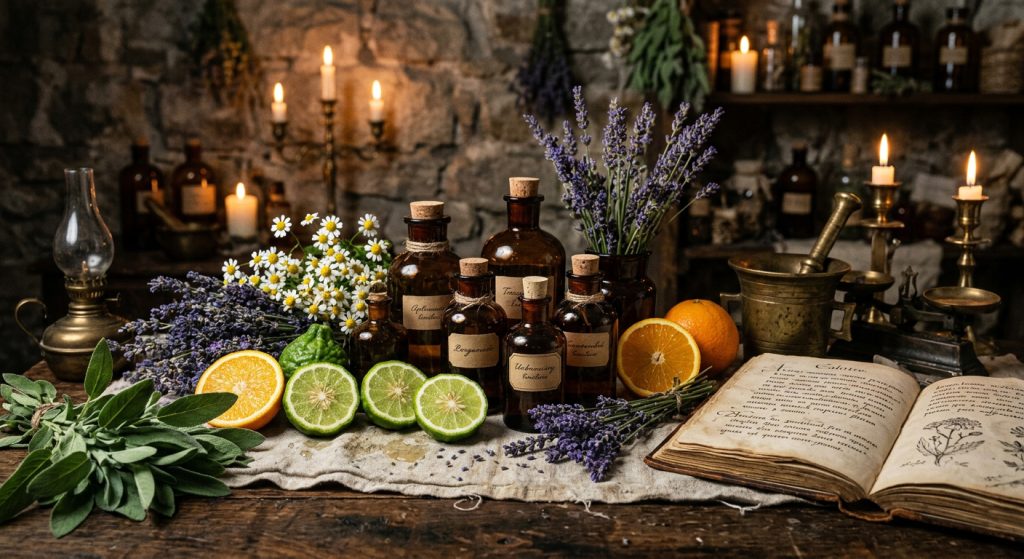
Can a scent really have an effect on sleep?
Or do we feel calmer simply because we believe lavender is soothing?
This question has been at the center of aromatherapy research for many years.
Today, we have more than just traditional knowledge of its uses. Lavender essential oil and inhalation aromatherapy are also being studied through randomized controlled clinical trials, systematic reviews, and meta-analyses.
Among these studies, one involving Terra di Simana’s Sleep Companion Wearable Aromatherapy Patch stands out in particular.
Instead of diffusing lavender oil into a room using a diffuser, the researchers placed the essential oil inside a small, wearable aromatherapy patch and had participants wear it on their chest throughout the night.
In other words, the method under investigation differs slightly from traditional aromatherapy practices:
A portable, localized aromatic source worn close to the respiratory area.
This is precisely the approach at the heart of the Sleep Guardian’s design concept.
Clinical study using a wearable aromatherapy patch
A randomized controlled trial published in the *Journal of Alternative and Complementary Medicine* in 2015 examined 79 college students who reported having sleep problems.
The participants were divided into two groups.
Both groups received sleep hygiene training.
However, one group used an aromatherapy patch containing Lavandula angustifolia essential oil throughout the night, while the other group used a control patch that did not contain essential oil.
The details of the study design were particularly interesting.
The patch used was approximately 3 cm in diameter and was applied to the chest area overnight. The primary method of administration was inhalation of the scent, not skin absorption.
The patch system was designed to gradually release the aroma into the person’s breathing area throughout the night.
In this regard, the study approached aromatherapy not merely as a way to “diffuse a pleasant scent into a room,” but as a wearable and personal method of inhalation.
Terra di Simana Note
The same fundamental question lies at the heart of the development of the Sleep Companion:
What happens if, instead of diffusing the aroma throughout the entire room, we keep it close to the person’s own breathing zone?
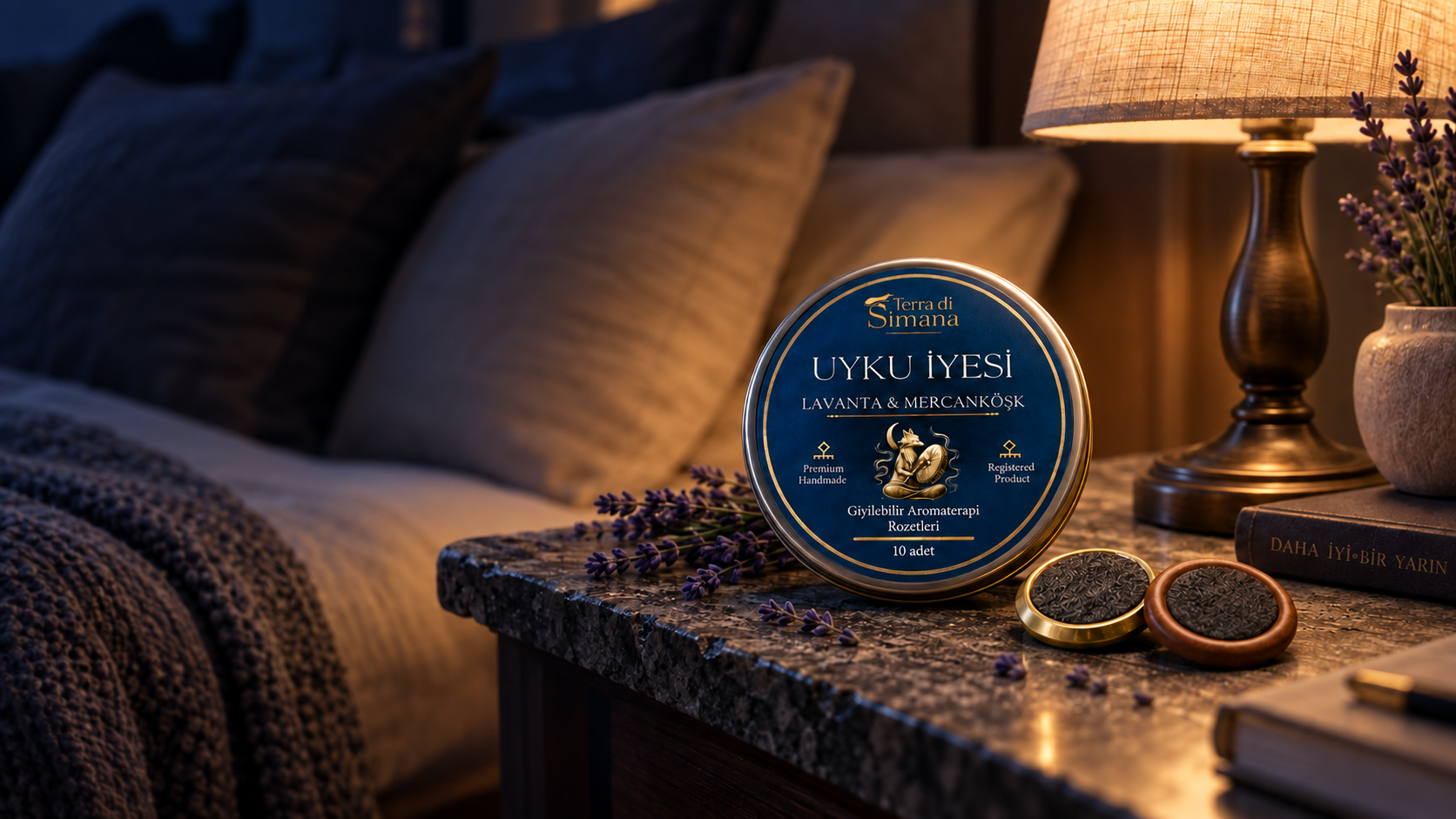
For this reason, Uyku İyesi is not a traditional room fragrance or perfume.
It is a personal aromatherapy space that you carry with you.
The result of the study: Not longer sleep, but a perceived improvement in sleep quality
One of the most important findings of the study is this:
The total sleep duration of the lavender group did not increase significantly.
In other words, the study did not conclude that “people who used lavender slept more hours.”
The real change was seen in sleep quality. In the group that used lavender plus sleep hygiene, sleep quality improved more than in the control group that used only sleep hygiene.
The researchers used two standard scales to assess sleep quality:
the Pittsburgh Sleep Quality Index (PSQI) and the PROMIS Sleep Disturbance Scale.
The difference in PSQI scores between the groups:
- At the end of the intervention, p=0.01
- p < 0.001 at the two-week follow-up.
The difference in PROMIS assessments was:
- At the end of the intervention, p = 0.04
- At the two-week follow-up, the difference was at the p=0.007 level.
In other words, participants in the lavender group reported better subjective sleep quality not only during the study but also during the follow-up period.
Waking up feeling more rested in the morning
One of our favorite findings from the study regarding Terra di Simana emerged from another measurement.
Participants in the lavender group were found to be approximately 1.87 times more likely to wake up feeling rested.
This result was statistically significant. This distinction is important because good sleep isn’t just about “how many hours we sleep.” Sometimes a person can sleep for eight hours and still wake up feeling tired.
Sometimes, even after sleeping for a shorter period, they may feel more refreshed in the morning.
For this reason, modern sleep research focuses not only on total sleep duration but also on:
- The transition to sleep
- Nighttime awakenings
- Subjective sleep quality
- The feeling of being rested after waking up.
Is this just one study? No.
Although the wearable patch study is extremely interesting, the scientific basis for the relationship between aromatherapy and sleep is not limited to a single study.
Meta-analyses published in recent years have collectively evaluated numerous clinical studies, particularly those focusing on the inhalation of Lavandula angustifolia.
2026 meta-analysis: 11 randomized controlled trials
A systematic review and meta-analysis published in 2026 evaluated 11 randomized controlled trials and a total of 628 adults.
The researchers reported that the use of lavender essential oil had a statistically significant overall effect on sleep quality.
Overall effect:
SMD = -0.56
; 95% confidence interval: -0.96 to -0.17
; p = 0.005
was calculated.
More importantly, the significant result persisted even when the researchers evaluated studies using lavender exclusively via inhalation separately.
In the inhalation subgroup:
SMD = -0.
62%, 95% confidence interval: -1.12 to -0.12
, p = 0.02.
This finding is significant because studies investigating the effects of lavender are not limited to massage or topical application. Inhalation of the scent is an aromatherapy method that has been studied in its own right.
What did the meta-analysis of 34 studies find?
Another systematic review and meta-analysis published in 2021 evaluated 34 separate studies.
The researchers reported that aroma inhalation therapy had a significant effect on sleep problems.
One of the notable points in the study was the essential oils used. In inhalation studies using a single essential oil, lavender emerged as one of the oils yielding the strongest results.
Therefore, it should come as no surprise that Lavandula angustifolia is used in the majority of clinical studies in the fields of sleep and aromatherapy.
2025 meta-analysis: 2,072 patients
Another systematic review and meta-analysis published in 2025 evaluated inhalation aromatherapy in individuals with comorbidities and sleep problems.
The analysis included 27 studies and a total of 2,072 patients.
The researchers reported that inhalation aromatherapy was associated with significant improvement in sleep problems.
Positive changes were also observed in measures of anxiety and depression in some studies.
However, it is important to note a scientific limitation here.
The studies:
- The oils they used
- Dosages
- Duration of use
- Application methods
- The participant profiles differ from one another.
For this reason, the scientific literature does not tell us that “aromatherapy definitively cures insomnia.”
What it does tell us is more nuanced: There is a consistent and research-worthy relationship between inhalation aromatherapy and subjective sleep quality.
Why is lavender studied so frequently?
Two molecules in Lavandula angustifolia essential oil stand out in particular:
linalool and linalyl acetate.
In addition, in varying proportions:
- Limonene
- Terpinen-4-ol
- 1,8-cineole.
The chemical composition of lavender essential oil can vary depending on the region where it is grown, the harvest season, distillation conditions, and the plant’s chemotype.
For this reason, simply stating that “lavender was used” is often insufficient in aromatherapy research.
The quality and botanical identity of the essential oil used are also important.
What might the scent of lavender do to the brain?
An experimental study published in the *Journal of Ethnopharmacology* in 2025 sought a more mechanistic answer to this question.
The researchers examined the effect of the scent of lavender on sleep using polysomnography and neurophysiological methods.
In experimental animals, lavender inhalation:
- Reduced the time to enter NREM sleep
- increased the amount of NREM sleep
- increased slow-wave activity on the EEG
- induced an increase in delta activity
The researchers then observed that when they disrupted certain GABAergic neuronal pathways in the olfactory tract or the central amygdala, lavender’s effects on sleep were significantly reduced.
This research suggests that the effect of the lavender scent may not be explained solely by “enjoying a pleasant smell.”
However, there is an important detail: This study was conducted on an animal model.
Therefore, it is not yet possible to say that the same neurological mechanism occurs exactly the same way in humans.
The Unique Relationship Between Smell and the Brain
The sense of smell works a little differently from our other senses.
Aromatic molecules detected by olfactory receptors in the nose trigger the brain to:
- Emotion
- Memory
- Behavior
- Stress response.
That is why it is no coincidence that a scent can evoke a past memory within seconds.
This same connection also forms the basis of aromatherapy research.
Scientists are investigating whether certain essential oils can be perceived not merely as “pleasant scents,” but as complex sensory stimuli processed by the nervous system.
Not every study yields positive results
It would not be accurate for a scientific article to report only positive studies.
While some studies on lavender and sleep have yielded strong results, in other studies the differences between groups did not reach statistical significance.
For example, in a double-blind, randomized study conducted on postmenopausal women diagnosed with insomnia, although improvements were observed in some sleep parameters, no significant difference was found between the lavender and placebo groups in the primary outcome measure.
Similarly, although older meta-analyses reported strong results in favor of aromatherapy, high heterogeneity was observed among the studies.
This reminds us of something extremely important: In aromatherapy, the outcome does not depend solely on the plant used.
All of the following can influence the outcome:
- The botanical species of the essential oil
- Its chemical profile
- The amount applied
- The method of inhalation
- Duration of use
- The individual’s sensitivity to the scent
- Type of sleep problem
- Environmental conditions
Therefore, the statement “lavender puts everyone to sleep” is not scientifically accurate.
So what do these studies mean for Sleep Guardian?
There is a striking parallel in terms of the application method used.
The system used in the 2015 clinical study consisted of an essential oil, an absorbent surface, and a patch worn on the chest area.
The operating principle of Uyku İyesi is also based on an aromatic essential oil blend, an absorbent wearable surface, and application to the user’s chest area.
For this reason, we define Uyku İyesi not so much as a room fragrance but rather as a “personal wearable aromatherapy application.”
Does more essential oil mean a stronger effect?
No. And one of the most interesting insights from the 2015 patch study emerges here.
The amount used in the study was only 55 μL of lavender essential oil. This is a very small volume.
Therefore, when it comes to aromatherapy, it is incorrect to assume that “the more oil, the stronger the effect.”
Essential oils are highly concentrated aromatic raw materials.
Using too much oil:
- Can make the scent unpleasant
- Nasal and throat irritation
- Headaches
- The person becoming accustomed to the scent too quickly.
The goal of aromatherapy is not to saturate the surface with as much oil as possible, but to create a measured and sustainable exposure to the aroma.
Can the Sleep Buddy correct poor sleep habits on its own?
No.
And in fact, this is one of the most valuable aspects of the 2015 study.
In the study, participants were not given lavender alone.
Sleep hygiene education and lavender inhalation were used together.
Therefore, it’s more accurate to think of the Sleep Guardian as part of a good nighttime routine.
For example:
- Go to bed at roughly the same time every night
- Dimming screen light before bed
- Avoid caffeine late in the evening
- Keep the bedroom cool and dark
- Slowing down both your body and mind before getting into bed are key components of sleep hygiene.
Sleep Hygiene can add a sensory cue to this transition. Using the same aromatic profile at similar times each night can also help the scent become mentally associated with the nighttime routine over time.
In other words: The scent can become a small cue that reminds the body that nighttime has begun.
Can a scent really affect sleep?
The most accurate answer science can provide today is this: We cannot say that a scent alone is a “sleep button” that puts everyone to sleep.
But at the same time, saying that “aromatherapy is nothing more than a pleasant scent” no longer fully aligns with the scientific literature.
Randomized controlled trials, systematic reviews, and meta-analyses on the inhalation of Lavandula angustifolia have revealed noteworthy results, particularly regarding subjective sleep quality and the feeling of restfulness.
Today, science is investigating not only the question “Does it work?” but also “How is scent processed by the nervous system?”
Uyku İyesi is positioned precisely at this point. Not as a medication. Not as a treatment for insomnia. And certainly not as a miraculous tool that will solve all sleep problems overnight.
But as a personal aromatherapy space you can carry with you throughout the night.
Sometimes sleep doesn’t come right away.
First, the light fades.
Sounds fade away.
Your breathing changes.
Your body slows down.
And the small signs that herald the night begin to repeat the same message over and over:
The day is over.
Sleep Guardian was designed to be one of those signs.
Frequently Asked Questions
Does lavender really help you sleep?
Some randomized controlled trials and meta-analyses suggest that inhaling Lavandula angustifolia may be associated with positive effects on subjective sleep quality. However, the results are not consistent across all studies, and lavender is not a substitute for medical treatment of insomnia.
Does lavender help you sleep longer?
A 2015 study on a wearable aromatherapy patch found no significant increase in total sleep time. In contrast, positive results were observed in assessments of subjective sleep quality and feelings of restfulness upon waking.
How does an aromatherapy patch work?
Aromatic essential oils are applied to an absorbent surface. When the patch is worn, the aromatic volatile molecules are gradually released into the surrounding air and are inhaled.
Can Sleep Guardian be used as a substitute for medication?
No. Uyku İyesi is not a medical product or a treatment for insomnia. Individuals experiencing persistent or severe sleep problems should consult a healthcare professional.
Is the Sleep Companion applied directly to the skin?
No. The aromatic blend is applied to the absorbent section of the pin. The product is worn on the user’s clothing for personal aromatherapy inhalation.
References
Scientific and Legal Information
The research cited in this article is compiled from published scientific studies on lavender and inhalation aromatherapy.
Terra di Simana Sleep Essence is not the product tested in these clinical studies.
Sleep Essence is not a medication; it is not intended to diagnose, treat, or prevent any disease. This article is intended for informational purposes only and is not a substitute for medical advice.
To discover our natural aromatherapy products and herbal blends, inspired by the unique nature of the foothills of Mount Uludağ, visit our Terra Di Simana website. Follow our @terradisimana Instagram account to stay updated on our new nature-inspired posts, rituals, and shares. We believe that healing lies in the connection humans reestablish with nature; we are delighted to accompany you on this journey.