FREE SHIPPING on orders of 4,000 TL or more


Blog
Why Has Getting a Good Night’s Sleep Become So Difficult? Sleep Disorders in the Modern World, Aromatherapy, and Natural Stone Sleep Rituals


Sleep Disorders, Aromatherapy, and Natural Stone Sleep Rituals in the Modern World
Once upon a time, night was the world’s most natural sanctuary. As the sun set, the human body would slow down, thoughts would lighten, and sleep would come naturally. Today, however, many people find themselves repeating the same phrase when they lie down in bed: “I can’t sleep.”
The accelerating pace of modern life, screen light, and city life—which keeps the mind constantly alert—have profoundly altered our sleep patterns. That’s why sleep disorders and poor sleep quality have become one of the most common health issues today.
Yet during a good night’s sleep, the body repairs itself, the nervous system slows down, the immune system strengthens, and memory is consolidated. In short, sleep is life’s invisible healer.
However, modern life often disrupts this natural rhythm. This is precisely where many people begin to turn back to nature—to plants, scents, and small evening rituals…
The Effects of Insomnia
Why Is Sleep Quality So Important?
Scientific research shows that good sleep is essential for human health.
During sleep:
- The nervous system calms down
- The immune system is strengthened
- Memory is consolidated
- Hormonal balance begins to be restored
When
sleep quality declines, the following effects may occur:
- Mental fatigue
- Difficulty concentrating
- Increased stress and anxiety
- Weakened immune system
- Mood swings
For
this reason, healthy routines developed to promote better sleep have become one of the most important topics in the world of wellness today.
Healthy Sleep Habits
How to Establish a Natural Sleep Ritual?
Good sleep often comes not from a single solution, but from a combination of small habits.
The following methods are recommended for establishing healthy sleep habits:
- Go to bed at the same time every day
- Reduce screen light in the evening
- Establish routines that calm the mind before bed
- Dimming the lights and reducing noise in the room
- Keep your feet warm but your body cool
- Using natural scents
At
this point, aromatherapy and herbal scents create a supportive environment for many people.
Aromatherapy for Sleep
The Scents of Mind-Calming Herbs
The sense of
smell is directly connected to the limbic system, the region of the human brain associated with emotions and memory. For this reason, certain plant scents can have a rapid effect on one’s mental state.
Research on aromatherapy shows that some essential oils can promote a sense of relaxation and help improve sleep quality.
The most commonly used plants in aromatherapy for sleep are as follows:
Lavender: Lavender oil is one of the best-known oils in aromatherapy. Its soft floral scent can help calm the nervous system. For this reason, lavender oil is one of the most commonly used oils when it comes to aromatherapy for sleep.
Lemon Balm: Lemon balm is one of the plants traditionally associated with peace and tranquility.
Roman Chamomile: Roman chamomile is particularly favored in nighttime rituals due to its gentle, soft scent and sedative effect. Because of its light aroma, many people use it before bed.
Vetiver: Earthy vetiver oil has a deeper, heavier aroma. For this reason, it is considered one of the oils that calm and slow down the mind.
Ylang-Ylang: With its sweet and exotic scent, ylang-ylang oil can create a soothing atmosphere for the nervous system.
Rose: Rose oil is one of the plants associated with emotional balance. Its sweet, floral scent can add a gentle ambiance to evening rituals.
Cedarwood: The scent of cedarwood has a warm and comforting aroma. In many cultures, it is associated with nighttime and rest.
These essential oils are commonly used in aromatherapy diffusers, aromatherapy sprays, or personal aromatherapy products before bedtime.
Natural Stone Sleep Rituals
Which Stones Are Used in the Sleep Space?
The use of natural stones is a tradition as old as that of
plants. In some cultures, certain stones are associated with peace and tranquility.
In modern wellness practices, this practice is sometimes referred to as natural stone sleep rituals.
Some of the most commonly used stones in the sleep space are as follows:
Amethyst: Amethyst is one of the stones associated with mental calmness and inner peace. For this reason, it is frequently chosen for meditation and nighttime rituals.
Lapis Lazuli: Throughout history, lapis lazuli has been associated with wisdom and inner awareness. It is used in nighttime rituals as a stone that calms the mind.
Aragonite: Aragonite is a stone particularly associated with balance and grounding. Some people believe that keeping aragonite in the sleeping area helps stabilize the energy of the space.
When used in conjunction with aromatherapy, natural stones can create a more holistic sense of well-being for many people.
Sleep Rituals for Children and the Elderly
Sleep problems can occur not only in adults but also in children and older adults.
For this reason, many people are turning to gentler, natural methods instead of synthetic products.
Properly diluted aromatherapy applications:
- In children’s evening wind-down routines
- In helping older adults relax before bed
- Can help create a supportive atmosphere in care settings.
However, dosage and method of use are always important in aromatherapy.
Modern Aromatherapy and Sleep Rituals
Today, aromatherapy is not limited to diffusers. Modern aromatherapy approaches aim to incorporate botanical scents into daily life in more practical ways.
For example, portable aromatherapy products can allow essential oils to be experienced in low, controlled doses.
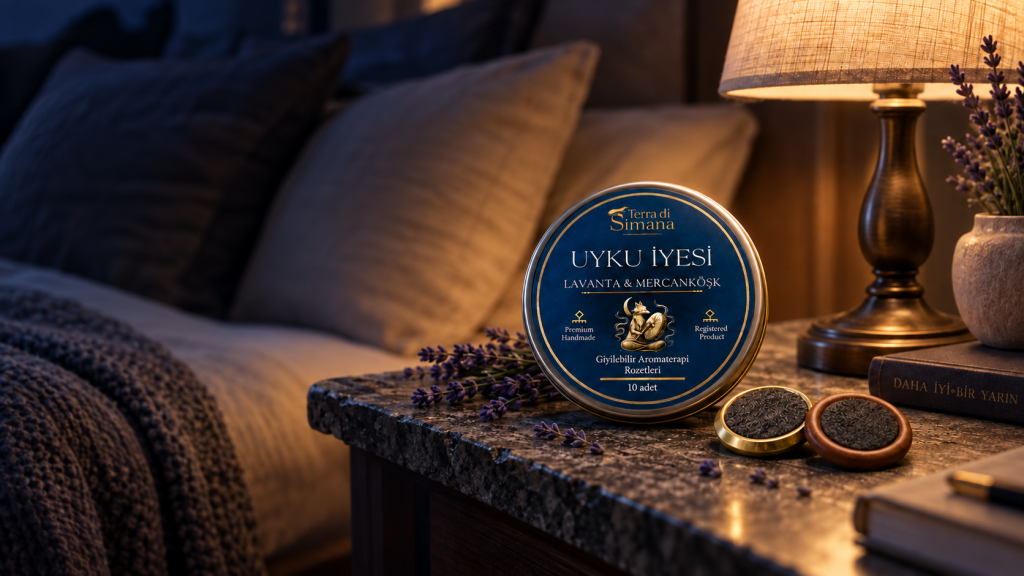
The “Drops of Serenity” prepared at Terra di Simana combine the calming atmosphere of lavender and similar plants with a crystal-infused aromatherapy approach.
Similarly, wearable aromatherapy badges are one of the portable aromatherapy methods that allow essential oils to be gently experienced throughout the day.
Such modern applications aim to transform aromatherapy from an experience tied solely to a specific place and materials into a natural part of life.
Sleep Is a State of Well-Being
A
good night’s sleep often comes not from grand solutions, but from small habits.
Dimming the lights a bit in the evening, slowing down the mind, inviting the scent of plants and the frequency of natural stones into the room…
Sometimes, a room where the scent of lavender gently wafts through the air can lift a person out of the day’s chaos and carry them to a calmer place.
Perhaps that is exactly what sleep is: slowly stepping away from the day’s noise and returning to ourselves.