 FREE SHIPPING on orders of 4,000 TL or more


Blog
What Is Fall Fatigue? 7 Small Changes to Recharge Your Energy This Fall

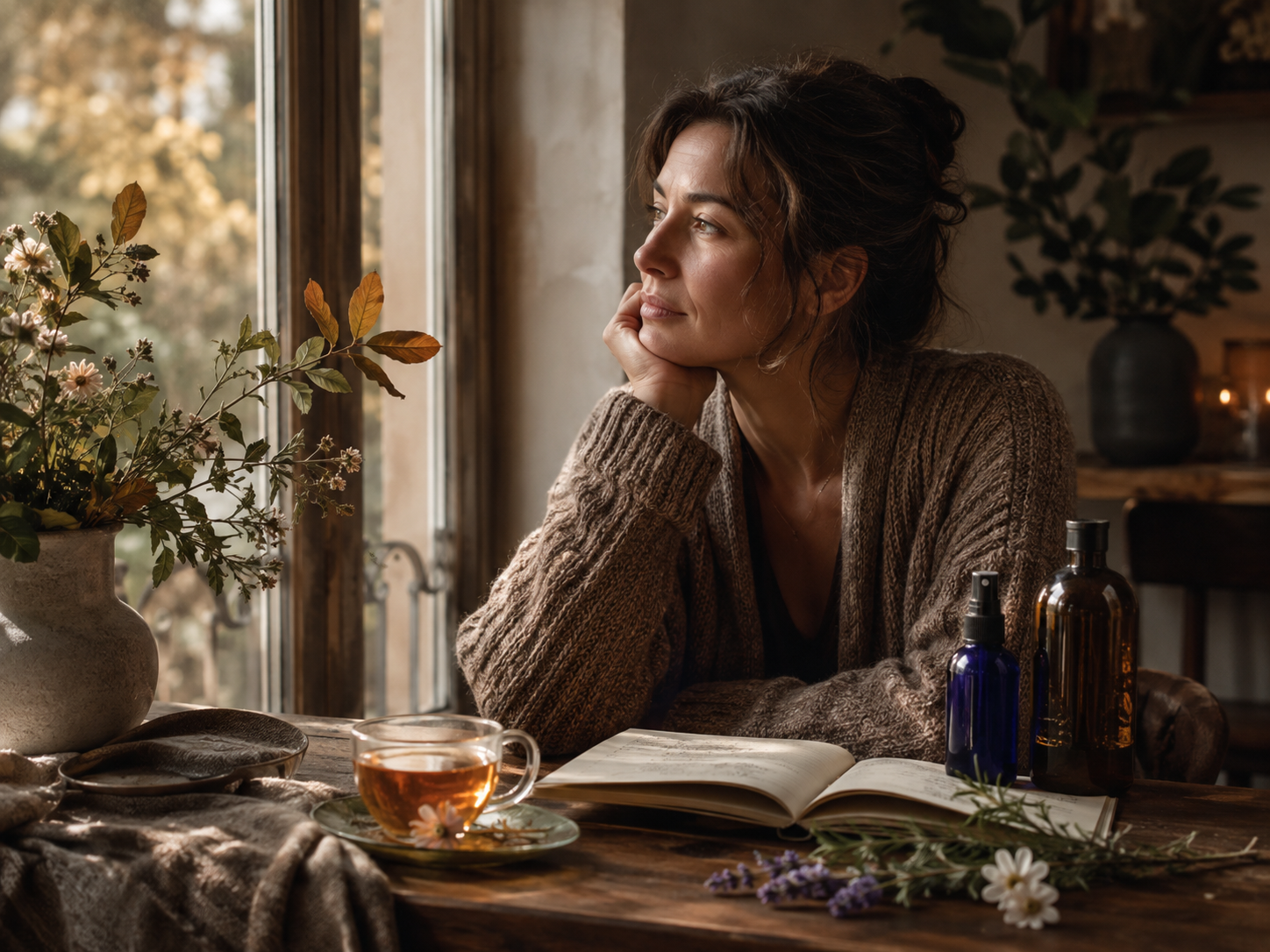
What Is Fall Fatigue? Why Do We Feel More Tired in September?
September arrives.
The morning light changes slightly. Evening falls earlier. The long days that streamed in through open windows during the summer are gradually replaced by a shorter cycle of light.
And some people notice the same thing right around this time:
“Why have I been feeling so tired these past few days?”
It may be harder to get up in the morning. Energy levels may drop in the afternoon. Your mind may feel a bit sluggish. You may want to sleep more, but sleep doesn’t always feel more restful.
This experience is often referred to in everyday language as “fall fatigue” or “seasonal transition fatigue.”
But first, let’s make an important distinction:
“Fall fatigue” is not a medical condition
“Fall fatigue” is not a recognized medical diagnosis in and of itself.
Furthermore, a study published in the *Journal of Sleep Research* in 2026 found no strong evidence to support the idea that symptoms of fatigue, daytime sleepiness, and insomnia regularly increase and decrease with the seasons in the general population. The researchers noted that some of people’s experiences with seasonal fatigue may be related to cultural expectations and individual differences.
In other words: It is not true to say, “Everyone must be biologically tired just because fall has arrived.”
But this doesn’t mean the seasons have no effect on the body. Because one of the most fundamental timers of human biology is still light.
What does the body notice when daylight decreases?
The human body doesn’t live by the clock alone. The biological clock in the brain monitors many signals from the environment, and one of the most important of these is the light-dark cycle.
This system:
- Regulates the timing of sleep and wakefulness,
- The melatonin rhythm,
- Body temperature,
- Levels of alertness,
- and the release times of certain hormones.
Studies showing that sleep timing and melatonin rhythms vary with the seasons in humans have been available for a long time. Even in a classic study conducted under controlled conditions, differences were observed in the timing of sleep-wake cycles and melatonin rhythms between summer and winter.
More recent research also shows that the human biological clock is not independent of the natural light-dark cycle; irregular sleep schedules, artificial light, and modern lifestyles can affect circadian rhythm.
In short, the body doesn’t read the September calendar. But it does notice when the light changes.
What are the symptoms of fall fatigue?
Since “fall fatigue” is not an official diagnosis, there is no fixed “list of symptoms.” However, people who feel less energetic during the seasonal transition often mention the following:
- Difficulty getting up in the morning,
- Low energy throughout the day,
- Increased desire to sleep,
- A feeling of mental fogginess,
- Decreased motivation,
- Difficulty concentrating,
- Less desire to be active,
- Tending to wind down earlier in the evening,
- Changes in cravings for sweets or carbohydrates.
The key point here is this: These symptoms are not specific to fall.
They can occur in a wide variety of conditions, ranging from iron deficiency to thyroid problems, from infections to sleep disorders, and from intense stress to depression. For this reason, it is incorrect to attribute prolonged fatigue—or fatigue that significantly disrupts daily life—solely to “seasonal changes.”
Why is the decrease in daylight important?
Light does more than just help us see. It also sends a message to the brain: “It’s daytime now.”
Systematic reviews examining the effects of light on alertness in humans show that light intensity, duration, and timing can influence alertness levels.
A 2025 review also emphasizes that light and circadian timing play a significant role in sustaining attention and cognitive performance.
Therefore, one of the first things to do in the fall is surprisingly simple: Get out into the light in the morning
Instead of spending the entire day in a dimly lit home or office as soon as you wake up, exposing yourself to natural daylight as early as possible sends a strong timing signal to your biological clock.
You don’t need a special app for this.
Open the curtains.
Step out onto the balcony.
Drink your coffee by the window.
Walk for 10–20 minutes on your way to work.
Sometimes, the answer to wellness isn’t expensive.
If the sun is out, you should make the most of it first.
Why does sleep change during seasonal transitions?
One of the most common mistakes made in September is this: We feel tired during the day and start staying in bed longer to make up for it.
But staying in bed longer doesn’t necessarily mean sleeping better.
Your sleep pattern is related to both your biological clock and the sleep pressure that builds up throughout the day.
Therefore:
- Waking up at very different times every day,
- Sleeping until noon on weekends,
- Spending a long time in front of a bright screen in the evening,
- Taking long naps during the day can further disrupt your sleep schedule.
In the fall, resetting your body’s internal clock is often more valuable than “sleeping more.”
Why is it possible to feel tired in the morning and stay awake at night?
This situation is quite familiar, especially in modern life.
Morning: “Don’t wake me up.”
11:30 p.m.: “I’m not sleepy at all.”
One reason for this may be an imbalance between natural and artificial light.
Not getting enough light during the day while being exposed to intense light from phones, computers, and home lighting in the evening can send mixed time signals to the body’s internal clock.
A systematic review examining the relationship between daily light exposure, sleep-wake rhythms, and mood in healthy adults also highlights the importance of light patterns for daily biology.
So here’s a simple fall rule: Make your days brighter and your nights a little darker.
Is fall fatigue the same thing as seasonal depression?
No. This distinction is important. Some people may experience not just a few days of low energy during the fall and winter months, but a recurring and distinct pattern of seasonal depression.
Seasonal Affective Disorder (SAD) is a type of depression that follows a seasonal pattern.
According to the NIMH, in winter-type SAD:
- Loss of energy,
- Excessive sleeping,
- Difficulty concentrating,
- Social withdrawal,
- and an increased craving for carbohydrates may be observed. It typically begins in late fall or during the winter months and can last for months.
Therefore, it is important not to confuse a few days of “September blues” with seasonal depression.
If symptoms last longer than two weeks, are accompanied by noticeable sadness or loss of interest, and affect daily functioning, the issue should not be treated merely as a wellness routine. The NIMH also makes this distinction between mild, short-term symptoms and more pronounced, persistent problems.
How long does fall fatigue last?
There is no scientifically established duration for this, as “fall fatigue” is not a clinical syndrome.
If the issue is:
- Returning to work after vacation,
- A shift in sleep schedules,
- Less daylight,
- or a sudden increase in the intensity of your daily routine, your energy levels may recover within a few days or weeks once your routine is back on track.
However, if fatigue keeps increasing or persists unchanged for weeks on end, it’s time to stop blaming the season. Because sometimes September is innocent.
7 Small Changes to Boost Your Energy in Fall
1. Set a consistent wake-up time
Waking up at roughly the same times each day helps regulate your body’s internal clock.
In particular, getting up early Monday through Friday and sleeping in until noon on the weekend constantly throws your circadian rhythm off.
2. Get some sunlight in the early morning
If possible, go outside.
The goal isn’t to sunbathe, but to send a strong “the day has begun” signal to your biological clock.
3. Start your morning with your body before your phone
Your first experience after waking up doesn’t have to be checking email, the news, messages, or social media.
Open the curtains.
Drink some water.
Move around a bit.
Then bring the digital world into your day.
4. Don’t reach for sugar right away when you hit that afternoon energy slump
When your energy drops, foods that provide a quick sugar rush can be tempting.
However, you should avoid turning the “energy dip → sugar → short-lived boost → another dip” cycle into an automatic habit.
You can also try taking a short walk, drinking some water, airing out the room, or stepping outside for a few minutes.
5. Stay active throughout the day
As the days get shorter in the fall, the time you spend outdoors can decrease without you even noticing.
Don’t think of walking solely as exercise.
Think of it as a daily ritual that provides movement, daylight, and a change of scenery all at once.
6. Reduce evening stimulation
If you’re tired during the day but can’t sleep at night, the solution isn’t just to be more alert in the morning.
You also need to make the night feel like night again.
Dimming the lights, turning off the computer, taking a quick shower, reading a book, or using a consistent scent—these repeated cues can help clarify the day-night transition.
Meta-analyses on aromatherapy and sleep report positive results, particularly in adults; however, since the methods of these studies vary widely, it’s more accurate to view this as a complementary routine rather than a sleep treatment.
7. Don’t interpret every instance of fatigue as “I need to work harder”
The modern reflex to low energy is often more coffee, more motivation, more discipline, and more productivity.
Yet sometimes what’s needed isn’t stimulation but a reset.
Perhaps this is what fall reminds us of: It’s a bit odd to expect humans to work at the same pace all year round while nature changes its rhythm.
How can scent and sensory routines be used during the transition to fall?
Scent doesn’t eliminate the cause of fatigue.
It doesn’t correct iron deficiency.
It doesn’t make up for lack of sleep.
It does not treat seasonal depression.
But when paired with repetitive behaviors, scent can become a sensory tool that marks different parts of the day.
A 2022 meta-analysis examining the effect of aromatherapy on fatigue evaluated 19 studies and reported lower fatigue scores in the aromatherapy groups. However, the majority of the studies were conducted on adults with chronic illnesses, and there was very high heterogeneity among the results. For this reason, the findings should not be directly applied to “fall fatigue” in healthy individuals.
For this reason, at Terra di Simana, we find it more meaningful to use aromatic products not as an “energy treatment,” but as small sensory pauses that help set the rhythm of the day.
A two-part routine with Terra di Simana as we transition into fall
There’s no need to use everything at once here.
Morning and midday: Clearing mental fog
When starting the day or during moments of mental heaviness in the afternoon, Memory Arrows can be used as an aromatic marker that defines the workspace and the moment of “restarting.”
In addition to rosemary hydrosol, the formula features more vibrant aromatic profiles such as bergamot, lemon, orange, juniper, bay leaf, and ginger.
The product’s purpose here is not to “cure fatigue,” but to create a familiar sensory space for returning to mental work.
A brief moment of refreshment during the day: Neroli Hydrosol
Some days, what we need isn’t more stimulation, but a few minutes to step away from the hustle and bustle.
Neroli Hydrosol is 100% pure floral water obtained by distilling bitter orange blossoms and can be used as a refreshing skincare step on the face, neck, or décolletage throughout the day.
This is where we especially love it during transitional periods like September—a little “fresh start” moment as we move into a new season.
Evening: Leaving the Day Behind
What some people call “fall fatigue” is actually a strange paradox: exhausted during the day, yet the mind is still active at night.
At times like these, “Drops of Serenity” can be used to create an aromatic routine that signals the start of the night. The “Terra di Simana” formula contains lemon balm, chamomile, and rose hydrosols, along with lavender, marjoram, cedar, and other aromatic ingredients.
Because feeling more energetic the next day often has more to do with how we end the previous night than with what we do in the morning.
For those who don’t view the entire transition as merely a matter of “boosting energy,”
Terra di Simana’s Yülek Balance Gate is part of the brand’s “finding balance and purification” collection. We position these types of sets not as clinical solutions for energy or fatigue, but as sensory and personal care practices for those seeking to reestablish their life rhythm.
As we transition into fall, the question doesn’t always have to be, “How do I boost my energy?”
Sometimes the more accurate question might be: “Where did I lose my rhythm?”
When should we not just brush it off by saying, “It’s just the change of seasons”?
Fatigue is an extremely common symptom.
Therefore:
- If it lasts longer than a few weeks,
- If it’s getting progressively worse,
- If it makes it difficult to perform daily tasks,
- Shortness of breath,
- palpitations,
- Unexplained weight change,
- Fever,
- Significant sleep disturbances,
- Intense sadness or loss of interest,
- If accompanied by other symptoms such as noticeable physical weakness, it should be evaluated by a healthcare professional.
Aromatherapy, a sleep routine, daylight, or walking are not substitutes for a medical evaluation in this case.
Fall may not be wearing you out; it may be changing your rhythm
What nature does in September isn’t to shut down all at once.
The light dims.
Temperatures fluctuate.
The days get shorter.
Plants begin to prepare for something else.
The human body isn’t entirely unaffected by all of this either.
But it’s not accurate to label every energy dip as “fall syndrome.”
Perhaps the best approach is not to fight the body, but to give it a few clear cues:
Morning light.
Daytime activity.
Regular meal and work times.
Less stimulation in the evening.
Darkness again at night.
And a few familiar scents that accompany different times of the day. Because adapting to a new season isn’t always about pushing ourselves harder; it’s about translating our time back into a language our bodies can understand.
Frequently Asked Questions
Is “fall fatigue” real?
“Fall fatigue” has not been defined as a distinct medical condition. Although seasonal changes in sleep and circadian rhythms are observed in people, a new study from 2026 did not show a consistent seasonal pattern of fatigue and daytime sleepiness in the general healthy population.
Why do I want to sleep more in the fall?
Changes in daylight hours, a decrease in daily activity, and shifts in the sleep-wake cycle may affect sleep timing in some people. However, a pronounced and prolonged state of excessive sleepiness should be evaluated separately.
How long does fall fatigue last?
There is no established standard duration. A mild drop in energy associated with changes in routine may resolve quickly; fatigue that lasts for weeks or worsens should be investigated for other causes.
Does daylight really affect energy levels?
Light is one of the key regulators of the circadian rhythm, and controlled studies suggest that light may have direct effects on wakefulness.
Does aromatherapy help with fall fatigue?
While there are studies and meta-analyses examining the effects of aromatherapy on fatigue, a significant portion of the evidence has been obtained from specific patient groups. Therefore, aromatherapy should be considered not as a “treatment for fall fatigue,” but as a complementary approach that complements daily sensory routines.
Is fall fatigue the same as seasonal depression?
No. Seasonal affective disorder is a type of depression characterized by a recurring seasonal pattern and is distinct from simple low energy.
Scientific Sources
Wang Q et al. Effectiveness of Aromatherapy in Alleviating Fatigue in Adults: A Meta-Analysis. 2022.

