FREE SHIPPING on orders of 4,000 TL or more



Blog
Simana’s Diaries – 21 – The Breath Left by the Sky

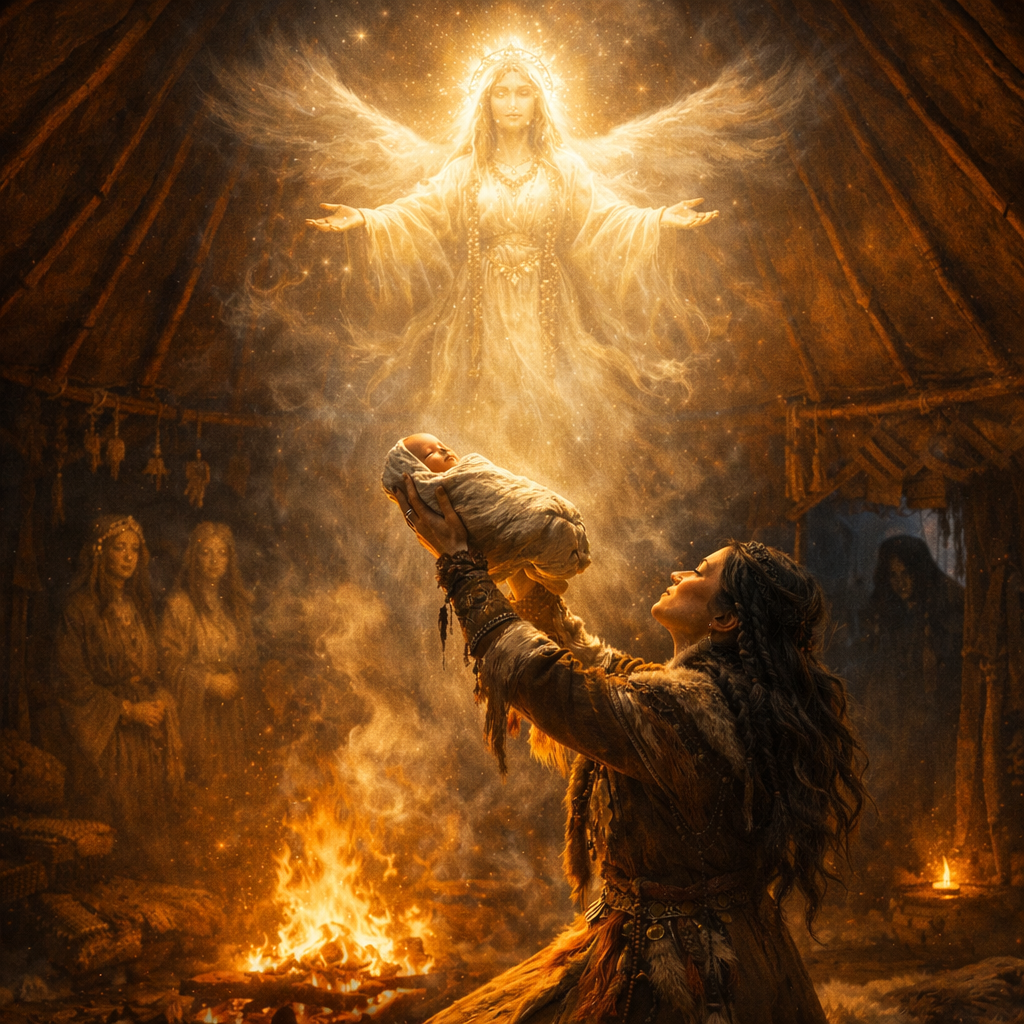
Night had settled over the camp like a heavy yet peaceful blanket. The fires hadn’t gone out; they’d merely turned to embers. Their smoke rose, drawing thin lines across the darkness of the sky, then vanished among the stars. Inside her tent, Simana leaned her back against the furs, quietly trying to shake off the day’s fatigue. After nights spent in the heavens, the world always seemed a little foreign; it was as if the earth had remained the same, but the eyes that saw it had changed.
Just then, the tent flap parted hurriedly.
A young man rushed in, still catching his breath. His chest rose and fell rapidly; his voice trembled along with the cold the wind had carried inside.
“Simana… You need to come,” he said. “Gökçe is about to give birth. Her labor has started… But they’re afraid.”
Simana stood up. She paused for a moment inside the tent; she didn’t rush. Because a shaman did not rush to a birth. It was not right to meet a birth with haste; it was a door opening between heaven and earth, and doors did not respond to haste.
She slung her fur cloak over her shoulders and tied her small pouches to her belt. Inside were dried grasses, incense, and a piece of red string. When she stepped out of the tent, the steppe night awaited her; the stars were silent but seemed to be watching intently.
As she approached Gökçe Kız’s tent, she heard the labored breathing coming from inside. Women were whispering, someone was carrying hot water, and another was murmuring a prayer by the door. When Simana entered, everyone’s gaze turned to her for a moment; yet no one asked a question. For everyone in the camp knew that childbirth was considered not only the woman’s business but also that of the spirits.
Gökçe Kız’s face glistened with sweat. Her hair was plastered to her forehead; when she looked at Simana between contractions, her eyes held not so much fear as the weight of something long-awaited.
This child had not come easily.
Years ago, Gökçe Kız’s womb had remained silent, and the women of the tribe had urged her to be patient. At that time, Simana had ascended to the heavens and searched for the level where the embryo tree stood—the tree the Nanai shamans called omija muoni… the branches where spirits wait before entering a body… From there, she had brought an embryo spirit and entrusted it to the mother’s fate.
Now that spirit was knocking at the door.
Simana knelt down and placed her palm on the woman’s forehead.
“The door is opening,” she said softly. “Don’t be afraid. The one coming isn’t alone.”
Then a small fire was lit in the center of the tent. She tossed a handful of dried juniper into the fire; the smoke rose slowly.
The smoke would confuse the malevolent spirits, throwing them off course. For the moment of birth drew the attention not only of good spirits but also of dark entities—most of all, Al Karısı.
The Al Karısı was one of the oldest fears of the steppe peoples. She would prowl around women in childbirth, approach weakened bodies, and seek to steal the baby’s soul. At night, she would circle the tents and wait at the threshold. The way to ward her off was not through fear, but by blessing the doorway.
Simana pulled the red string from her belt and tied it to the tent pole.
“This is Umay’s cord,” she said.
Then she raised her head toward the sky; her voice was not loud, but her words filled the tent.
“O Mother Umay, gentle hand of the heavens, protector of mothers’ wombs…
This child’s path is clear. This woman’s door is sacred.
Let her husband’s eyes not see this place. Let his shadow not cross the threshold.”
The women bowed their heads. A silence fell over the tent; in that silence, there was only Gökçe Kız’s breath and the crackling of the fire.
Simana sat down beside the woman. She placed her hands on her belly and waited for a long time without saying a word. Then the contractions began.
The women’s hands gripped Gökçe Kız’s shoulders. Simana warmed a handful of water by the fire and added a few drops of milk to it. This was an ancient tradition; sprinkling milk after childbirth was meant to welcome the new life with blessings.
And finally, a new sound rose within the tent. The first cry.
When the baby was born, Simana took her, looked at her face. She was a tiny being; yet beneath her eyelids lay the light of a sky she had not yet forgotten.
She traced a sign on the baby’s forehead with her finger.
“May it be blessed,” she said.
Then she turned to the women.
“Prepare the forty-day water.”
For the newborn child and the new mother stood at the world’s most fragile threshold for forty days. Bathing in the “forty-day water” was an ancient ritual of purification meant to restore balance to body and soul. It contained forty drops of water, forty pebbles, and forty intentions.
The baby was placed beside its mother. The women sprinkled milk in front of the door—so as not to forget the earth’s share.
Simana sat by the fire a little longer.
Outside, the night was still in full swing; the stars stood silently in the depths of the sky.
At that moment, Simana remembered once more:
The shaman’s path is not solely for ascending to the heavens.
The shaman is called for the three gates.
When a child is born…
When a couple unites their lives…
And when a spirit departs this world.
For life consists of three great gates that open between heaven and earth.
That night, a new breath began to circulate over the steppe.
And the invisible shadow of Mother Umay waited silently at the threshold of the tent.