FREE SHIPPING on orders of 4,000 TL or more



Blog
What Is Aromatherapy? The Science of Essential Oils and Their Real Effects

There are certain scents that people perceive not just through their noses, but through their past.
A single drop of lavender gently parts the curtains of childhood. The dry, deep breath of cedar gathers a scattered thought within. Roman chamomile sometimes does more than just soften the air—it softens a person’s inner climate as well.
Aromatherapy is rooted precisely at this threshold—where scent and the body, plants and the nervous system, nature and humanity can once again communicate.
But before we get lost in flowery prose, we must ask the right question: What is aromatherapy?
Do essential oils truly have measurable effects?
Or is the whole matter simply about ascribing extra meaning to pleasant scents?
The answer is neither entirely mystical nor entirely dismissive. Scientific data suggests that aromatherapy can demonstrate promising effects in certain areas; however, these effects do not always manifest with the same intensity, in the same person, or under the same conditions. In other words, what truly matters is context, dosage, method of use, and honest interpretation.
What Is Aromatherapy?
What Is
Aromatherapy? It is the use of essential oils derived from plants as part of a complementary health approach. These oils are typically used by inhalation or, when properly diluted, applied to the skin. The U.S. National Center for Complementary and Integrative Health (NCCIH) defines aromatherapy precisely within this framework and emphasizes that it is a complementary approach—not a substitute for medical treatment—that can, in some cases, support well-being.
It is important to make this distinction clear. Because the first requirement for taking aromatherapy seriously is not to present it as a “miracle system.” The fact that it is plant-based does not mean it is unlimited or beyond question; however, it is also incorrect to dismiss it simply because it is “natural.”
What Is an Essential Oil?
Essential oils are concentrated aromatic compounds extracted from a plant’s flowers, leaves, bark, roots, or resin. Chemically, they may contain terpenes, esters, alcohols, aldehydes, and numerous other volatile compounds. Therefore, what we call an essential oil is more than just a pleasant-smelling extract; it is a concentrated plant extract with a chemical profile and the potential for biological interaction.
Moreover, not all oils are the same. Even the oil from the same plant can vary depending on the soil, climate, harvest time, and distillation method. That’s why understanding aromatherapy requires much more than just knowing the plant’s name; it also requires understanding the plant’s chemistry, context, and method of use.
How Does Aromatherapy Work?
One of the most discussed aspects
of aromatherapy is the relationship between the olfactory system and the nervous system. When scent molecules reach the nose, these signals connect with regions of the brain associated with emotion, memory, and behavior. This is why it’s no coincidence that certain scents can evoke nearly instantaneous associations, feelings of relaxation, or restlessness in people.
A comprehensive 2023 review examining the effects of essential oils on the nervous system reports that some studies have shown supportive results regarding stress, fatigue, memory issues, behavioral symptoms, and sleep problems. However, the same review clearly states that not every group yielded the same results; negative or ineffective outcomes were also observed in some patient groups. This is a very important detail. Because science tells us this: there is potential for an effect, but caution is required when making generalizations.
Does Aromatherapy Really Work?
Answers to
this question often swing to extremes. One side portrays aromatherapy as a cure-all. The other side dismisses it outright as “quackery.” Yet reliable sources offer a more balanced perspective.
Sleep Quality
A
2021 meta-analysis reported that aromatherapy is associated with improved sleep quality in adults and older adults. Positive results were also reported for stress, pain, anxiety, depression, and fatigue; however, researchers emphasize that interpretations should be made with caution due to methodological differences. On its page regarding sleep disorders, the NCCIH emphasizes that this 2021 review is promising in terms of insomnia symptoms and sleep quality, but notes that larger and more robust studies are needed.
Anxiety
A
2023 systematic review and network meta-analysis reported that essential oils may be associated with a reduction in both state and trait anxiety. A 2020 meta-analysis also suggested that aromatherapy using various essential oils could significantly reduce anxiety; however, it noted that further research is needed regarding appropriate dosage and methods. In other words, aromatherapy holds potential as a “complementary support” in the field of anxiety, but this area still rests on an evolving body of evidence.
Results Vary by Age and Situation
A
2024 study reported that aromatherapy is associated with improved sleep quality in older adults, noting particularly striking results with short-term, single-use applications of lavender. That’s good news. But we must also be honest and remember that the same results do not automatically apply to every age group, every essential oil, or every method of use.
So the answer is: Yes, aromatherapy can be effective in some areas. But it is not a miracle cure that works equally well for everyone, in every situation, and on its own.
The Most Talked-About Real Effects of Essential Oils
A Sense of Relaxation and Calm
Lavender, Roman chamomile, cedarwood, and certain floral oils are commonly associated with relaxation. The NCCIH, in particular, takes a cautious yet positive stance on lavender; some studies suggest it may be beneficial for anxiety-related symptoms, though the limitations of the research are clearly emphasized.
Support for Pre-Sleep Rituals
Aromatherapy is one of the most extensively researched areas when it comes to
sleep. The most important point here is that the oil should not be viewed as a sleep aid on its own, but rather as part of an evening ritual and a complementary method. This perspective is more honest and realistic.
Relief from Anxiety and Mental Stress
Although the results regarding
anxiety are promising, they are not yet flawless. Nevertheless, the data suggest that aromatherapy practices—particularly those involving inhalation or massage—may reduce tension in some individuals.
A Change in the Emotional Tone of a Space
There is a truth that, while it may not
always fit into a research statement, is very important for everyday life: Scent changes the spirit of a space. When the scent of a room changes, the rhythm of thought within that room can also change. Science doesn’t always express this as beautifully as poetry does; but the human body has quietly known this for thousands of years.
So Why Is the “Quackery” Myth So Widespread?
Because aromatherapy often undermines its own credibility due to two major mistakes:
First, presenting every essential oil as the answer to every problem. Second, downplaying safety and dosage information.
The NCCIH notes that when used improperly, essential oils can cause skin irritation, allergic reactions, and, in some cases, phototoxicity. Certain oils require extra caution for children, pregnant women, the elderly, or individuals with specific health conditions. In other words, just because something is natural doesn’t mean it’s unlimited or harmless.
How to Use Aromatherapy Safely?
1-Dilution Is Essential
Essential oils are highly concentrated. Applying them directly to the skin is often not recommended; they must be diluted with suitable carrier oils.
2-Not
every oil is suitable for everyone Age, sensitivity, medication use, skin type, and medical history are important factors. A method that works for one person may not be suitable for another.
3-Oral use is
a separate area of expertise. The indiscriminate ingestion of essential oils is not considered safe. The oral use of many essential oils is not considered safe without professional guidance.
4-A more cautious approach is required for children and the elderly
Low-intensity, gentle, and controlled methods should be preferred,
especially for young children and vulnerable groups.
How Does Aromatherapy Fit into Modern Life, and What Is Aromatherapy?
In the past, aromatherapy was mostly associated with baths, massages, or fixed locations. However, modern people are often on the go—living on the road, at work, in front of screens, or in the midst of city noise. That’s why modern aromatherapy is concerned not only with the question “Which oil does what?” but also with “How can this experience be integrated into daily life?”
Sometimes it’s an evening ritual. Sometimes it’s a brief moment to catch your breath and clear your mind in the middle of the day. And sometimes it’s a scent that serves as a reminder to return to your center.
How Do We View Aromatherapy at Terra di Simana?
We don’t view aromatherapy merely as a pleasant scent. We see it as a way for the essence of a plant to be incorporated into a person’s daily life in a more elegant and livable way.
On one side is the distilled oil. On the other is the fragmented attention of modern life.
On one side is the voice of the plant.On the other, the nervous system, worn out from the day’s demands.
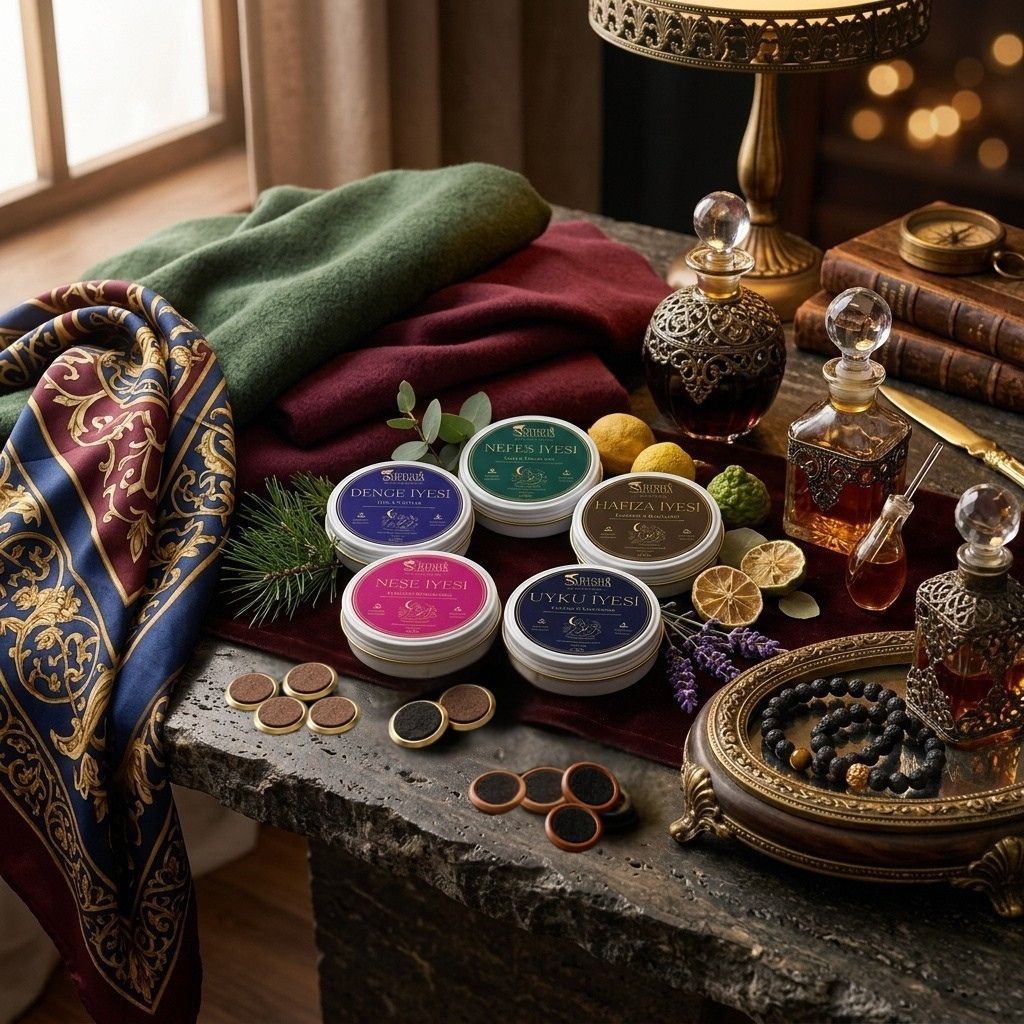
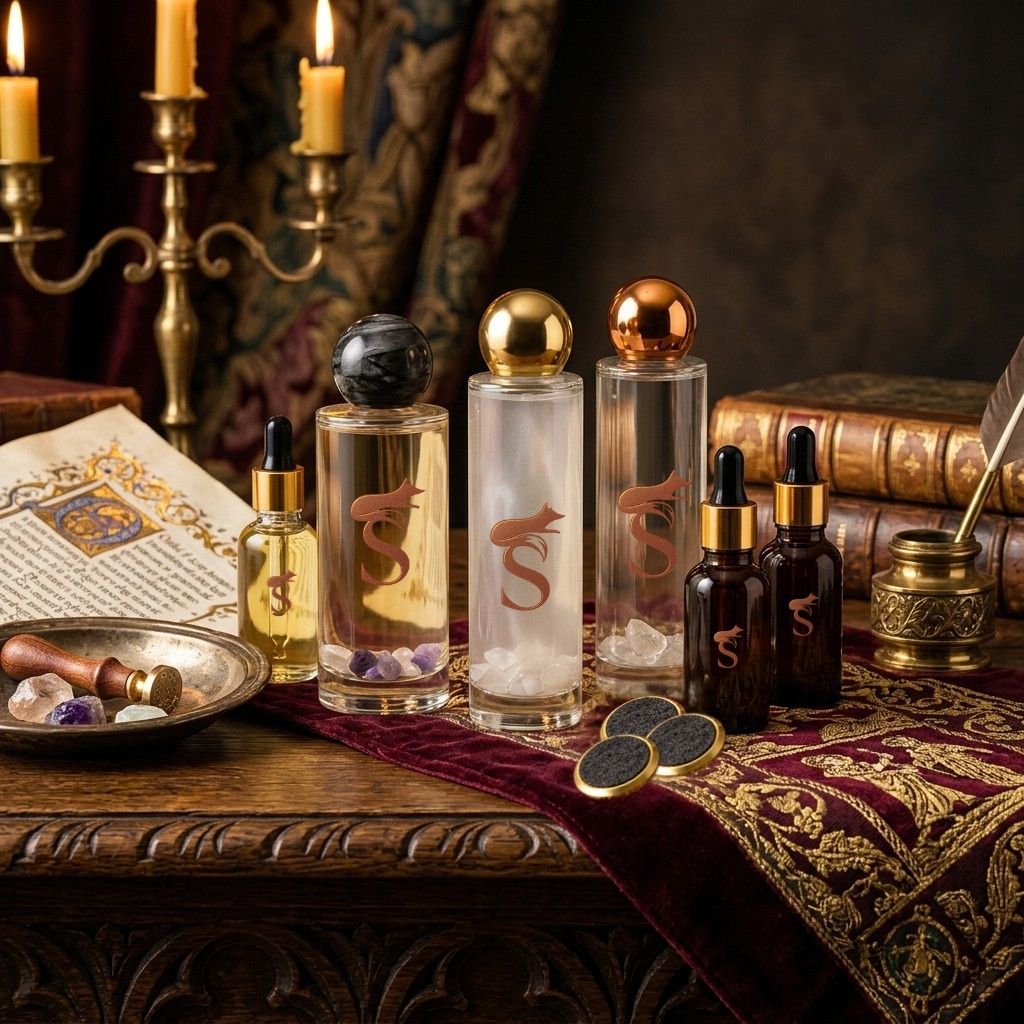
That is why, at Terra di Simana, aromatherapy takes shape as portable rituals, wearable aromatherapy solutions, or crystal-infused aromatherapy formulas. Because what truly matters goes beyond simply creating a bottle; it is about creating a small space where one can reconnect with oneself.
For this reason, Simana’s Chest features pins that open the door to the world of wearable aromatherapy,
“Drops of Serenity” for those seeking a softer atmosphere in the evening, and natural stone and aromatic balance blends for those wishing to explore the union of ritual and stone.
What Is Aromatherapy? Is It About Believing in It? Or Understanding It?
What Is
Aromatherapy? The key is not to treat aromatherapy as magic, but to understand it from the right perspective.
Scientific data tells us this: Essential oils can indeed be effective in certain areas. There are particularly promising results in areas such as sleep, relaxation, and anxiety. However, this field requires careful interpretation, well-designed studies, and knowledge of safe usage.
Therefore, we should neither idolize aromatherapy nor dismiss it. Sometimes a single drop of oil won’t change your life, but it can soften the harshness of an evening. Sometimes, rather than searching for miracles, it’s better to recognize small but real effects.
And sometimes, that’s exactly what a person needs.
Frequently Asked Questions
What Is Aromatherapy?
What Is Aromatherapy? It is a complementary approach that aims to support physical and mental well-being through the use of essential oils derived from plants, either through the sense of smell or by applying them to the skin.
What Is Aromatherapy, and Does It Really Work?
Just as important as the question “What is aromatherapy?” is the question of its effectiveness. Aromatherapy may have supportive effects for some people, particularly in areas such as stress, sleep, and anxiety; however, these effects can vary from person to person.
What Is Aromatherapy and How Is It Applied?
For those wondering “What Is Aromatherapy?”, it is typically applied by inhaling through a diffuser or by applying it to the skin after diluting the essential oils with carrier oils. The method of use varies depending on the type of oil and its intended purpose.
What Is Aromatherapy, and Is It Suitable for Everyone?
In addition to the question “What Is Aromatherapy?”, safety is also an important consideration. Not every essential oil is suitable for everyone. Careful use is especially necessary for children, pregnant women, and individuals with sensitivities.
What Is Aromatherapy, and How Does It Differ from Essential Oils?
The question “What Is Aromatherapy?” is often confused with essential oils. Essential oils are the fundamental components of aromatherapy; however, aromatherapy is a broader approach that encompasses the proper use of these oils and their holistic effects.
What Is Aromatherapy and How Is It Used in Modern Life?
Today, the answer to the question “What Is Aromatherapy?” goes beyond traditional uses. In modern life, aromatherapy has found its place in daily stress management, pre-sleep routines, and personal care rituals.
Sources
- NCCIH, Aromatherapy. Defines aromatherapy as a complementary health approach and explains its various forms of use.
- Sattayakhom et al., 2023, The Effects of Essential Oils on the Nervous System. A comprehensive review evaluating the effects of essential oils on the nervous system.
- Her et al., 2021, “Effect of Aromatherapy on Sleep Quality in Adults and the Elderly.” A meta-analysis on sleep quality.
- NCCIH, Sleep Disorders and Complementary Health Approaches. A summary evaluation of aromatherapy and sleep.
- Tan et al., 2023, “Essential Oils for Treating Anxiety.” A systematic review and network meta-analysis on anxiety.
- Gong et al., 2020, Effects of aromatherapy on anxiety. A meta-analysis on anxiety.
Follow
us on our @terradisimana Instagram account to learn more about aromatherapy and natural living.