FREE SHIPPING on orders of 4,000 TL or more



Blog
What Is Anxiety? The Hidden Meaning of Anxiety According to Ancient Wisdom

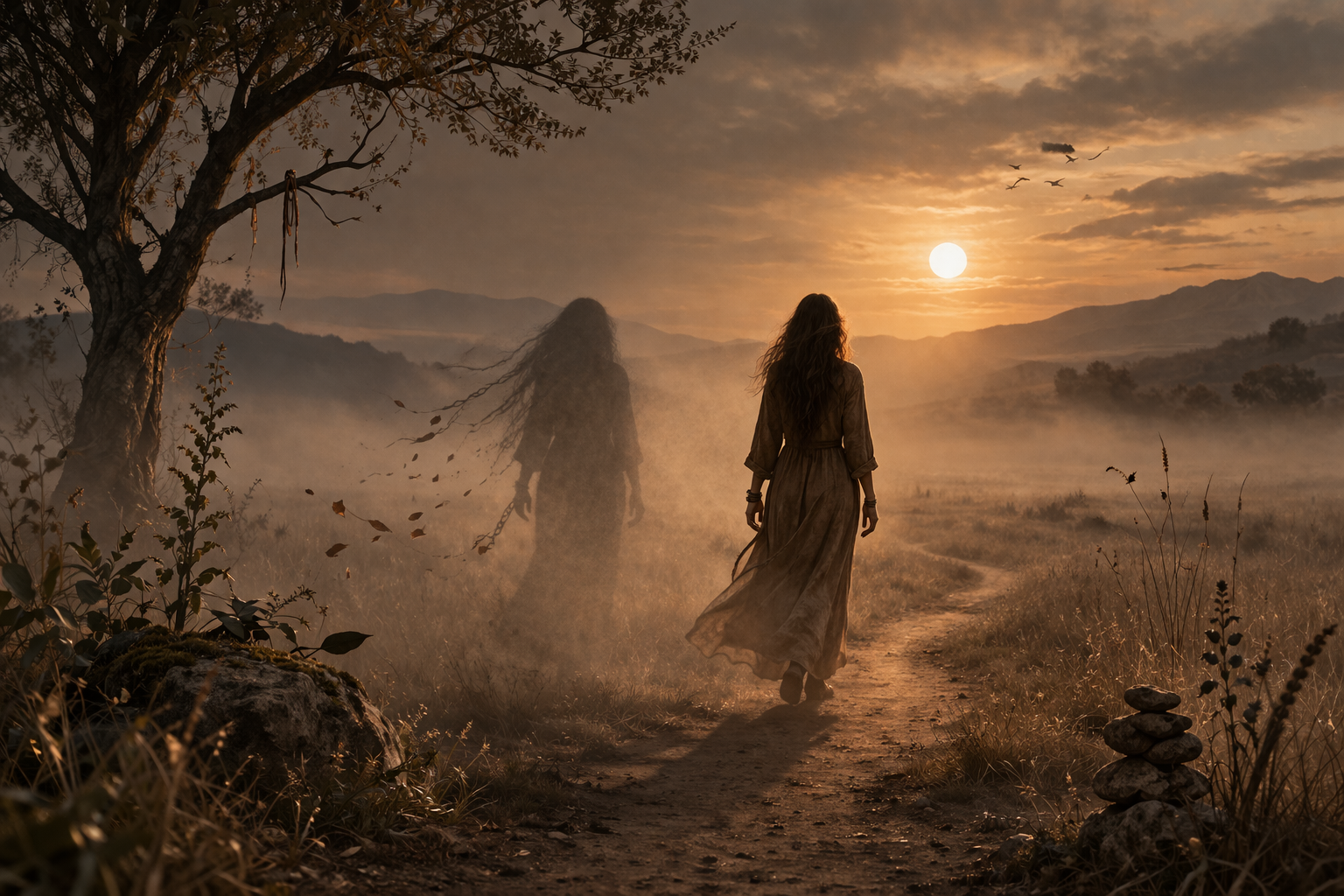
What Is Anxiety? Is It the Mind’s Warning System, the Noise of the Modern World, or an Ancient Call?
In
today’s post, we’ll explore the question “What Is Anxiety?” and interpret this concept through the Simana lens—with a simple, accessible, and down-to-earth perspective.
What is anxiety? Is it an alarm the mind sets off to protect you?
Is it the never-ending noise of the modern world…
or is it a much older, much deeper call?
Today, we call this anxiety. In modern language, anxiety is defined as a mental problem, a disorder that must be controlled. Answers to the question “What is anxiety
?” often boil down to the same things these days: a sense of threat, stress, uncertainty…
But this is only the visible part of the story. Because humans did not learn anxiety in the modern world. Anxiety has always existed alongside humanity. Only its meaning has changed today.
In ancient times, anxiety was not viewed as a disorder. No community, no healer, no sage would have defined it as a weakness that needed to be silenced. What was anxiety to them?
It is a sign…
A harbinger of a threshold…
The first tremor of an approaching transformation…
When a person drifts slightly from their inner balance… When nothing visible has changed yet, but something inside has begun to shift… Anxiety rises.
It is invisible. Yet it is felt.
It is silent. Yet it echoes within.
In ancient teachings, humans were not viewed as single-layered beings. The body, mind, and spirit were not seen as separate; they were understood as interconnected flows.
When one of these flows changed direction, the others struggled to keep up.
What emerges at that very moment is what we today call “symptoms of anxiety.”
But the sages of old did not call this a symptom. They called it a call.
Shamans and healers did not try to suppress this feeling. Because they knew this very well:
Anxiety does not arise when a person has lost their way. Anxiety arises when a person’s path is about to change.
In other words, anxiety is not an end—it is the threshold of a new beginning.
Today we ask, “What causes anxiety?” The ancients would ask a different question: “Where is this call trying to lead you?”
What Is Anxiety: What Does Psychology Say? What Does Ancient Wisdom Reveal?
According to modern psychology, the answer to
this question is that anxiety is a state of alertness arising from uncertainty about the future.
So when we ask today, “What is anxiety?” or “What is worry?” the scientific answer is clear: The mind sounds an alarm to prepare you for a potential threat.
This alarm manifests itself sometimes as a racing heartbeat, sometimes as shortness of breath, and sometimes as a restlessness that grows from within.
Modern language explains this, but does not fully grasp it. Ancient wisdom, however, approaches the same question from an entirely different perspective.
According to them, anxiety is not merely a reaction produced by the mind. Anxiety is a shift in one’s being.
It may seem as if nothing in one’s life has changed… but deep inside, something is no longer in its rightful place. And the body senses this.
In shamanic traditions and ancient teachings, humans were not viewed as single-layered beings. Humans were not composed solely of the body.
It was believed that a person had multiple “parts”:
- The spirit that remains in the body
- The wandering spirit
- The soul seeking direction
When these parts were in harmony, a person was in balance. But when one of them shifted out of place, the others struggled to compensate for this shift.
The vibration that arises at that very moment is what we today call “symptoms of anxiety” or “anxiety.”
That is why, in the ancient perspective, the question “What causes anxiety?” was not asked in the same way as it is today.
The ancients would ask: “Where did this person lose touch with themselves?”
Because, in their view, anxiety arose not from a threat, but from a disconnection.
Ancient healers did not label this condition as a disease. They viewed it as a disharmony, a displacement.
And that is why, when someone was experiencing anxiety, it was said:
“Their spirit isn’t fully settled within their body.”
Today, we try to suppress anxiety. But ancient teachings whisper this: Anxiety is not a voice to be silenced. Anxiety is the voice calling you back to yourself.
What Causes Anxiety? A Deep Dive from an Ancient Perspective
In the modern world, when we ask, “What causes anxiety?” or “Why does anxiety occur?” the answers are usually the same:
-Uncertainty.-Loss of control
.-Fear of the future
.
Psychology is right about these answers. But they’re incomplete.
Because these explanations describe the surface of anxiety… not its root.
Ancient wisdom, however, delves into the root. According to it, anxiety is less the result of a threat from the external world and more the result of a disharmony arising within the inner world.
Anxiety arises in the following situations:
- When a person lives contrary to their own nature
- When a person remains trapped in a life that does not belong to them
- When a person begins to carry the burdens of others
In other words, the issue is simple but harsh: Anxiety often whispers that the life you’re living isn’t truly yours.
That is why, in ancient teachings, anxiety was not suppressed. It was not silenced. It was listened to…
Because there is a direction within every anxiety. And that direction calls you from where you are to somewhere else.
Anxiety Begins When the Connection to Nature Is Severed
Humans didn’t learn anxiety in the city. Anxiety was born within nature.
Our ancestors faced real threats: Predators, hunger, harsh natural conditions…
When danger came, the body reacted. When the danger passed, the body calmed down. The cycle was complete.
Anxiety was fleeting. It was part of the flow.
Today, however, the situation has reversed. Physical threats are now far fewer.
We are safe.
Food is readily available.
We have no housing problems.
Yet, despite this, anxiety is on the rise. Because people today live with invisible threats:
- Social pressure
- Fear of failure
- Constant comparison
- A barrage of digital stimuli
The mind remains primitive, yet the world it is exposed to is excessively fast-paced and complex.
Here lies the root cause of chronic anxiety: the disconnect between the mind and life.
An ancient perspective would explain this much more simply: When a person becomes disconnected from nature, they also become disconnected from themselves. And this disconnection is felt as:
- Inner restlessness
- A constant state of being on edge
- An inexplicable sense of constriction
Today we call these “symptoms of anxiety.” But for the sages of old, these symptoms were not a problem. They were a sign.
Because:
- When contact with the earth is lost
- When the rhythm of life is lost
- When we drift away from nature’s cycles, humans lose their own inner rhythm as well.
And that’s exactly where anxiety begins. Not all at once. Slowly. Quietly. It signals that something inside has shifted out of place.
That is why ancient teachings say: Anxiety does not come to disturb you. It comes to realign you.
Symptoms of Anxiety: The Body’s Way of Speaking
What we call “symptoms of anxiety” today are actually the body’s language:
- Tightness in the chest
- Rapid breathing
- Stomach sensitivity
- Muscle tension
Psychology defines these as “symptoms of anxiety.”
Ancient teachings, however, interpret them as follows: The body sends a signal to where the spirit cannot reach. In other words, the body does not panic; it calls out to you.
How Do You Overcome Anxiety? Modern Methods or Ancient Transformation?
“How do you get rid of anxiety?” This is one of the most frequently asked questions today.
People are looking for ways to silence, eliminate, or completely eradicate anxiety. But we need to pause here and be honest: Anxiety is not a condition that needs to be completely eradicated. Because anxiety isn’t always harmful. When it arises in the right place and at the right intensity, it is one of the most powerful systems that ensures human survival.
Modern psychology acknowledges this as well. Beneficial anxiety:
- It motivates you
- It sharpens your focus
- Helps you recognize risks
Harmful anxiety:
- It stops you
- It clouds your judgment
- Creates a constant sense of threat
The key question here is: Is anxiety moving you forward… or is it trapping you where you are and limiting you?
Modern Methods Reduce Anxiety… But They Don’t Transform It
Today, the answers to the question “How do you get rid of anxiety?” are usually as follows:
- Breathing exercises
- Meditation
- Therapies
These work. In fact, they’re often necessary. But they mostly work on the surface. That’s because much of the modern approach focuses not on understanding anxiety,
but on controlling and suppressing it.
When your mind gets tired, distract yourself. When it gets intense, keep yourself busy. When it flares up, suppress it.
But there’s a critical gap here. No system asks this question: “Why did this anxiety arise?”
This is precisely where the real turning point lies. Because when you silence anxiety, you also silence the message it carries.
The Ancient Approach: Not Suppressing Anxiety, but Reading It
Ancient teachings take a different approach to anxiety. They don’t ask, “How do I get rid of this anxiety?” Instead, they ask, “Where is this anxiety calling you from?”
Because, according to them, anxiety isn’t a mistake. It’s a signpost. And the solution lies in recognizing that direction.
1. Anxiety Won’t Go Away Without Regulating the Body
In ancient systems, the first step was not to silence the mind, but to rebalance the body.
Connection with the earth… Walking… Rhythm…
Because the mind won’t quiet down until the body is calm.
This is the point that many people searching today for “How do I get rid of anxiety?” overlook: There are things that cannot be resolved with the mind alone.
2. The Senses: The Hidden Gateway to Anxiety
Ancient healers understood the power of the senses—especially smell…
Plants weren’t used solely for their physical effects. It was believed that every plant had a memory, a character.
Scent winds its way through the mind. It reaches the inner self directly.
That is why scents soothe, guide, and resolve anxiety.
3. Anxiety Won’t End Without Questioning Your Life
This is the harshest but most true point: Does this life truly belong to you?
Because many cases of anxiety stem from trying to stay true to oneself while living the wrong life.
As long as a person maintains a routine that isn’t their own, anxiety increases. And this increase isn’t a malfunction—it’s a warning.
How Was Anxiety Transformed in Ancient Rituals?
Healers did not try to eliminate anxiety. They channeled it. When given the right direction, anxiety could be transformed into a source of strength. Three fundamental methods were used for this:
1. Breath and Rhythm
The sounds of drums… Repetitive movements… Rhythmic breathing…
The goal was not so much to silence the mind as to rebalance it with the body.
They knew that when a person entered into a rhythm, anxiety begins to dissolve.
2. Scent and Plants
In the ancient world, plants were gateways. Scents were the keys to these gateways.
Scent enters without passing through the mind; it touches emotions and memory directly.
That is why it has been one of the tools that produces the fastest effect on anxiety—and today, modern science has published numerous academic studies confirming this claim.
3. Solitude and Nature
Someone experiencing anxiety was taken not to a crowd, but to nature. Because a person’s inner voice is heard most clearly in nature.
Earth, wind, silence… These are not merely settings; they are regulators.
Should We Try to Get Rid of Anxiety, or Transform It?
How does anxiety go away? It may not go away. But it changes.
When suppressed, it grows.
When listened to, it shows the way.
The modern world teaches us to silence anxiety.
Ancient wisdom, however, teaches us to understand it.
And the difference is this:
One provides temporary relief.
The other truly transforms you.
Anxiety and Modern Life: Where Does the Real Problem Begin?
What we call “modern-life stress” today can actually be summed up in a single sentence: Humans are living at a pace that goes against their nature.
Constant stimulation.
Constant comparison.
Constant pressure to produce and keep up…
The mind wasn’t designed for such a nonstop flow. But the modern world has established an order that allows no pause.
That’s why anxiety is on the rise. And people keep asking the same question: “How do I get rid of anxiety
?” “How do I overcome anxiety
?”
But a much more fundamental question is often left unasked:
“Why does this life feel so heavy?”
Because the real issue isn’t just anxiety itself. The problem is the way of life that produces anxiety.
An ancient perspective would see this much more clearly: When a person strays from their own rhythm, a sense of constriction begins within them.
This constriction is first felt as a mild restlessness. Then it fills the mind. Then it settles into the body. Today, we call this “anxiety.”
The modern system treats anxiety as a problem. But ancient wisdom says this: Anxiety is often not a problem, but a sign.
It indicates that something is too much, something is missing, or something does not belong to you.
At this point, the direction changes. Instead of running away from anxiety, you must approach it.
And we ask these questions:
- What is this anxiety telling me?
- Is there a real threat, or is it a scenario created by the mind?
- What is my body actually feeling right now?
These questions seem simple, but they run deep. Because once you start asking them, anxiety ceases to be an enemy. It becomes a compass.
Anxiety According to Ancient Wisdom: Not a Warning, but a Threshold
Ancient healers did not try to eliminate anxiety. They viewed anxiety as a threshold.
If a person felt restless for no apparent reason, it didn’t mean they were “wrong.” It meant they were ready for change.
Anxiety says, “If you stay here, you’ll feel confined.”
And perhaps the hardest truth to accept is this:
Anxiety doesn’t always mean you’ve done something wrong.
Sometimes, it means you can’t keep going the same way anymore.
Is Anxiety an Enemy, or a Guidance System?
What is anxiety? The modern world teaches you this: You must get rid of anxiety. You must reduce it, suppress it, control it.
But ancient wisdom says something else: Anxiety isn’t a voice that needs to be silenced. Anxiety is a call that needs to be heard.
Today, you’re searching for “how to get rid of anxiety.” Maybe you’re asking the wrong question. The real question might be:
-Why has this anxiety found me?
-What does it want from me?
-Where is it calling me?
Because anxiety is often not a threat. It’s a reminder.
- It makes you aware of what’s missing
- It reveals what’s missing
- It makes what doesn’t belong to you visible
And most importantly… it tells you that you can’t keep going the same way.
When a person strays from their true nature, they don’t realize it right away. But the body understands. The soul understands. And when this understanding cannot be put into words, it is felt as anxiety.
What you call “symptoms of anxiety” today may actually be a deeper inner wisdom striving to rise to the surface.
When you run from anxiety, you shrink. When you listen to anxiety, you expand. Because anxiety doesn’t come to keep you where you are. It comes to move you from where you are.
You can follow
us on Instagram at @terradisimana, browse all our products on our website, and find answers to questions like “What Is Anxiety?” in our blog posts!